


Get in touch
Stay informed
Receive monthly updates on trends, products and growth insights in your inbox.



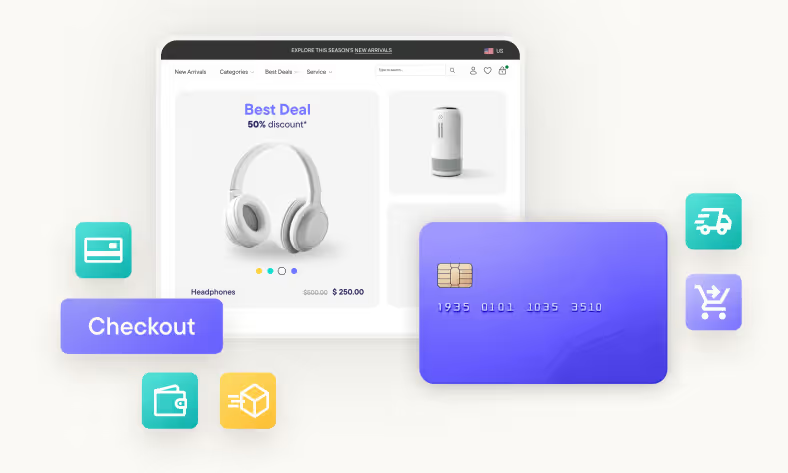
Expanding into new markets should be a growth driver, not a logistical nightmare. Yet, when it comes to payments, most global merchants face five core challenges — and often, all at once:
In a world of instant gratification and borderless commerce, payment should be the last thing slowing you down.
Let’s explore the key reasons why merchants are moving beyond traditional payment systems and toward flexible, modular architectures.
Customers feel more comfortable paying in their local currency and using their preferred method. A Baymard Institute study found that 9% of shoppers abandon their carts because there aren’t enough payment methods available.
You fill your cart, hit checkout… and your go-to payment method isn’t there. So you do what any shopper would: Abandon the cart and pretend it never happened. Retail therapy: Canceled. That’s exactly how digital shoppers feel when they don’t see familiar options like PayPay, PIX or Klarna.
Localization isn’t a perk: It’s a prerequisite for trust.
Trust is fragile online. Payment flows must feel seamless, intuitive and secure. Features like one-click payments, biometric authentication and wallet integrations (Apple Pay, Google Pay) have become industry standards.
A clunky, multi-step checkout with an unfamiliar processor? That’s how you lose a sale in 3 seconds.
Markets evolve. Regulations change. New payment tech (like BNPL, crypto and real-time rails) emerges every year. If your stack is rigid, you’re always playing defense.
Composable architectures let you plug in what’s needed without breaking your existing setup.
At commercetools, we’ve seen this pain firsthand. That’s why we built the commercetools Checkout, a fully composable, vendor-agnostic solution that lets merchants design and manage checkout and payments like never before.
Choose from world-class processors like Adyen, Stripe, Klarna or local specialists. Need to add a provider in a new region? Do it instantly and without a single line of code.
From business users to developers, everyone has the power to configure, test and deploy payment flows at their own pace. Want to prototype a new BNPL method for Europe? Use no-code connectors. Launching a custom checkout experience? Use low-code templates. Need total control? Go pro-code.
In short: One platform, endless flexibility.
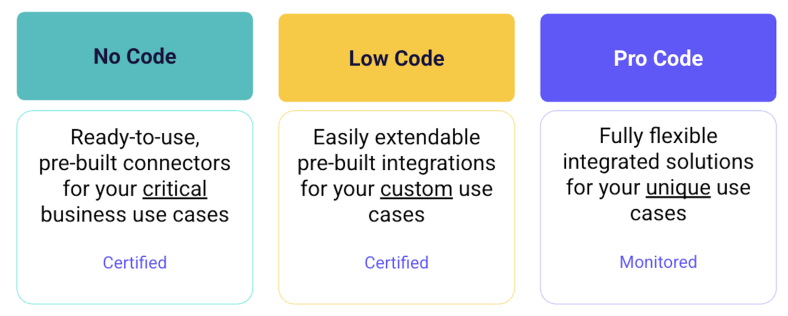
commercetools Checkout lets you swap providers on the fly, A/B test experiences and create conditional logic based on geographies, currencies or customer segments.
For example:
All are configurable without waiting for quarterly dev cycles.
As with everything at commercetools, our composability-first mantra applies. commercetools Checkout fits into your commerce architecture as a service — not a monolith. Build what you want. Scale how you need. Stay future-ready.
Modern commerce is global, fast and customer-first. But legacy payment systems were built for another era — one where slow, expensive and inflexible were the norm.
With commercetools Checkout, you’re not just adding more providers. You’re gaining:
Payments shouldn’t be a hurdle, but an advantage. commercetools helps make that possible.
Learn more about commercetools Checkout.

Senior Product Manager specializing in checkout and payments. She leads initiatives to create seamless and reliable commerce experiences, improving journeys for both merchants and consumers. Passionate about innovation and user-centered design, Esra strives to make commerce more efficient, intuitive, and accessible for everyone.
Receive monthly updates on trends, products and growth insights in your inbox.