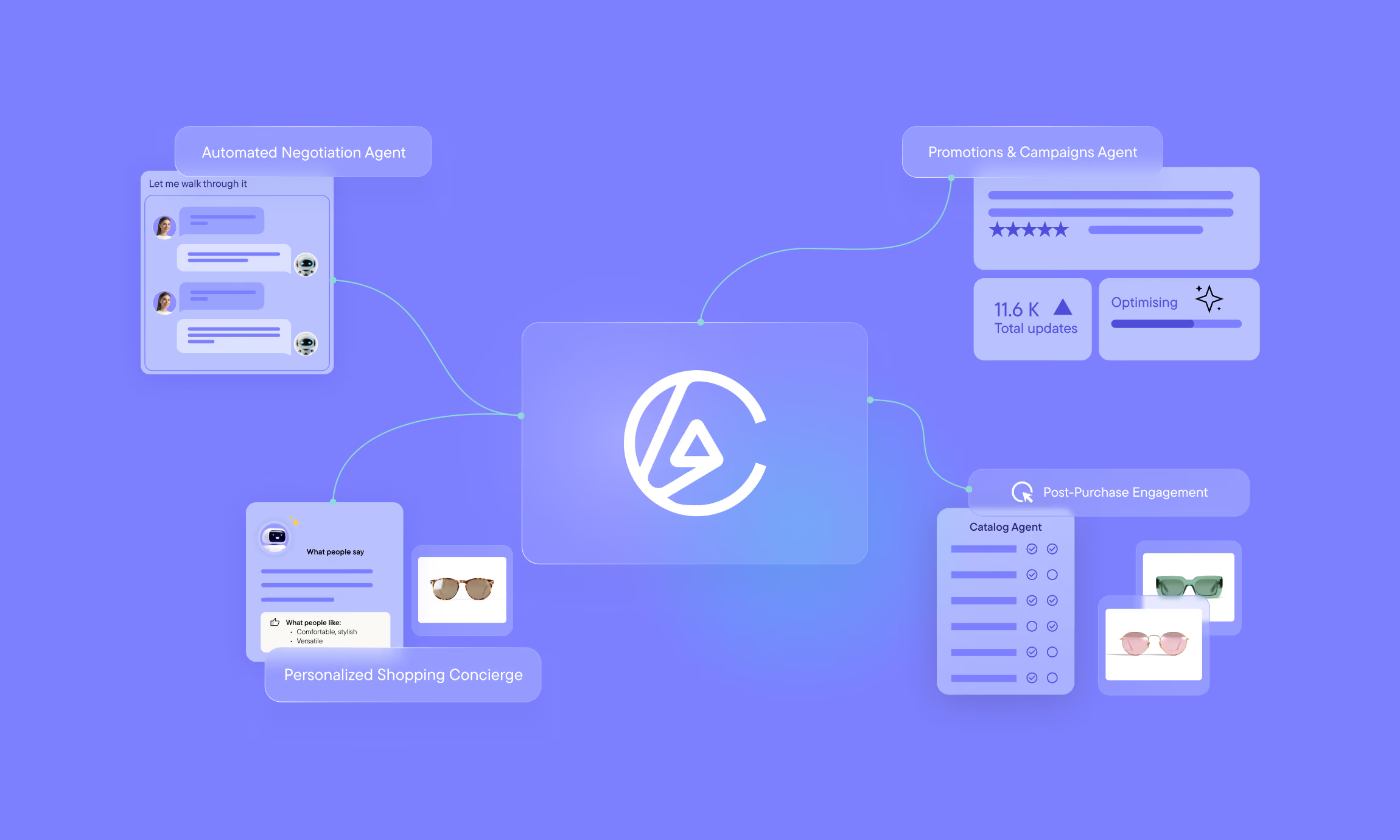
Multi-agent orchestration across your operations
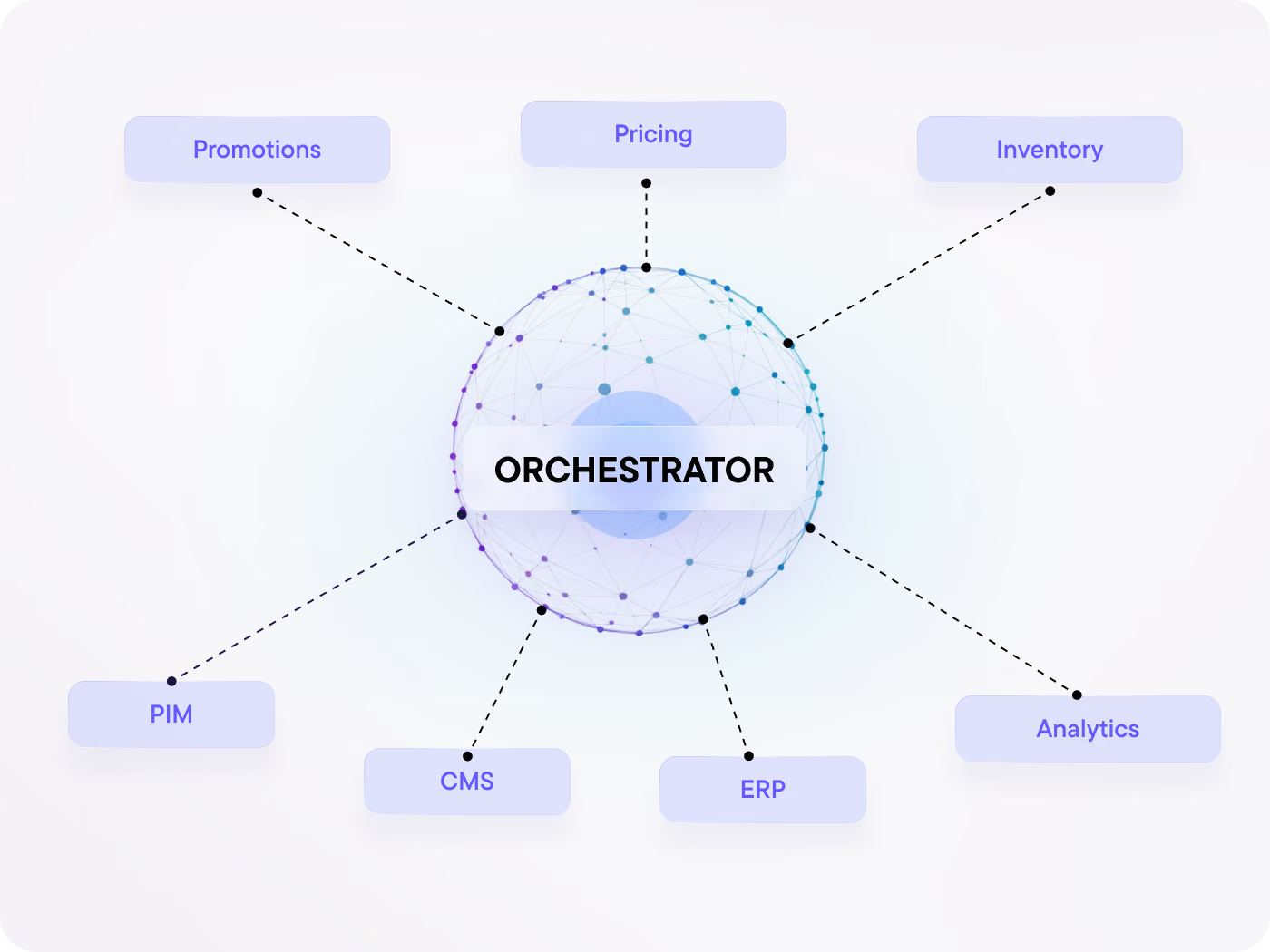
MosAIc coordinates AI agents across personalization, pricing and fulfillment, so commerce runs autonomously within the rules you define. Business users steer outcomes, not engineering tickets.


Pricing, inventory, campaigns and fulfillment: AI continuously senses, decides and acts in real time, optimizing commerce operations at scale with full governance. commercetools gives enterprises the platform to orchestrate every part of commerce as a single, coordinated system.


Autonomous commerce is the next evolution of enterprise operations: AI systems that move from assisting human decision-making to executing it. Instead of waiting for manual action, autonomous commerce systems sense signals, determine the right action and execute across pricing, inventory and marketing within defined business rules.
Unlike traditional automation, which relies on fixed rules, or agentic commerce, which acts on behalf of consumers, autonomous commerce operates your business in real time, at a scale and speed no human team can match.
Deliver faster experiences, more intelligent operations and personalized commerce at scale, powered by autonomous decision-making across your business.

Real-time pricing and inventory optimization help protect margins by avoiding underpricing from static prices and reducing the need to discount to clear excess stock.
Competitor price drops, sudden demand spikes, supplier outages: Autonomous commerce systems detect changes instantly and respond in seconds. Pricing, inventory and fulfillment adjust automatically to keep your business competitive.
Autonomous systems work around the clock, executing pricing, inventory and campaign decisions across every market and channel. As your business grows, they absorb the operational workload, reducing manual reviews, spreadsheets and approval chains so teams can focus on strategy instead of routine execution.
Autonomous doesn’t mean ungoverned. Every action happens within guardrails you define, with full audit trails, role-based access and policy enforcement built in.
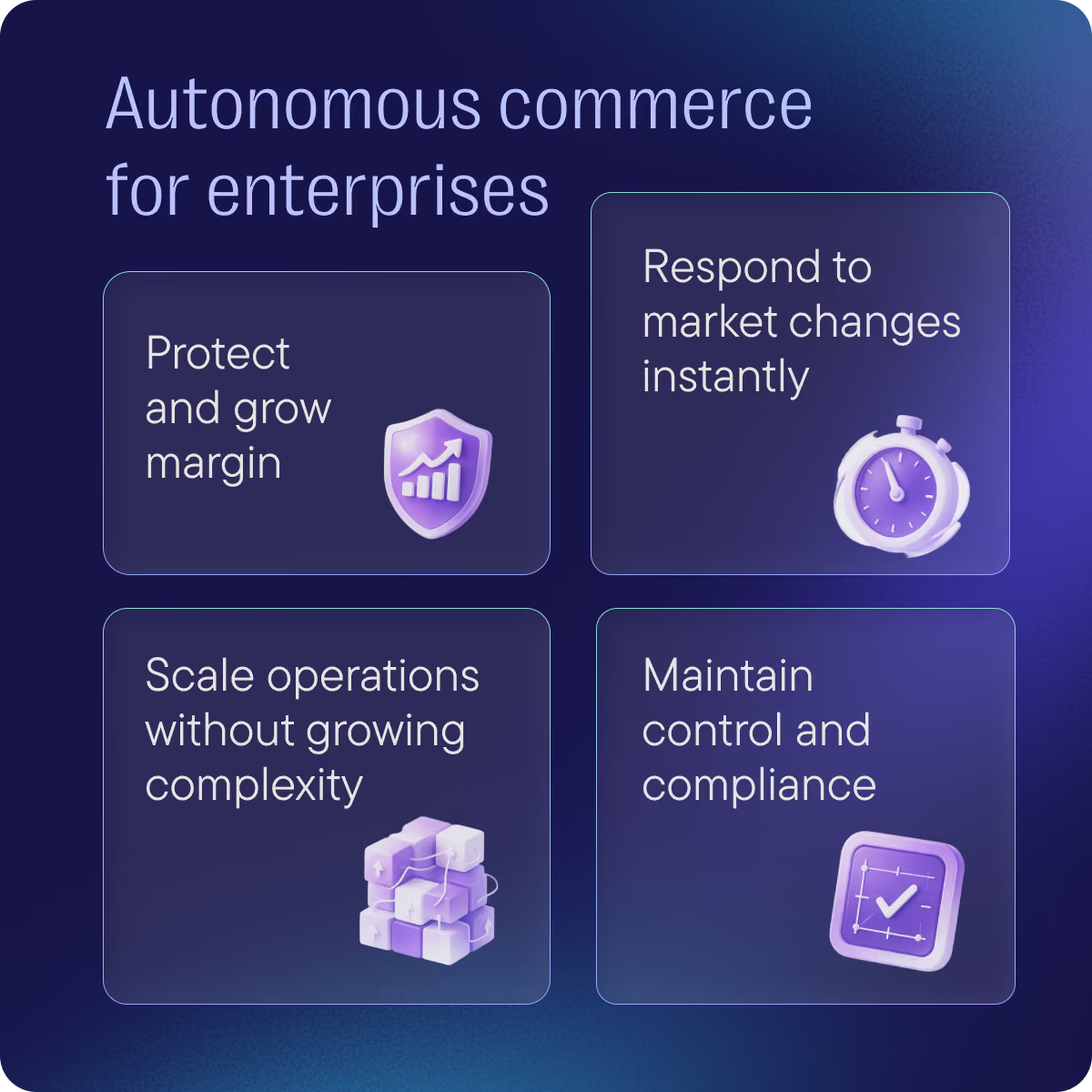
Autonomous commerce applies AI-driven intelligence across core commerce operations, enabling systems to sense signals, decide actions and execute in real time across the enterprise.

Dynamic pricing agents continuously monitor competitor prices, demand, inventory levels and margin targets. They adjust prices in real time to maximize profitability while remaining competitive.

Autonomous agents forecast demand, trigger replenishment, optimize fulfillment and manage procurement, continuously balancing stock levels, constraints and costs to reduce stockouts and excess inventory.

Marketers set objectives, and autonomous agents execute the strategy, identifying audiences, selecting mechanics, launching campaigns and continuously optimizing performance in real time.

Autonomous personalization engines tailor storefronts, recommendations, search results and promotions for each visitor using live behavioral signals, driving higher conversion, basket size and engagement at scale.
commercetools provides the infrastructure enterprises need to build and scale autonomous commerce operations safely and at scale.
MosAIc coordinates AI agents across personalization, pricing and fulfillment, so commerce runs autonomously within the rules you define. Business users steer outcomes, not engineering tickets.
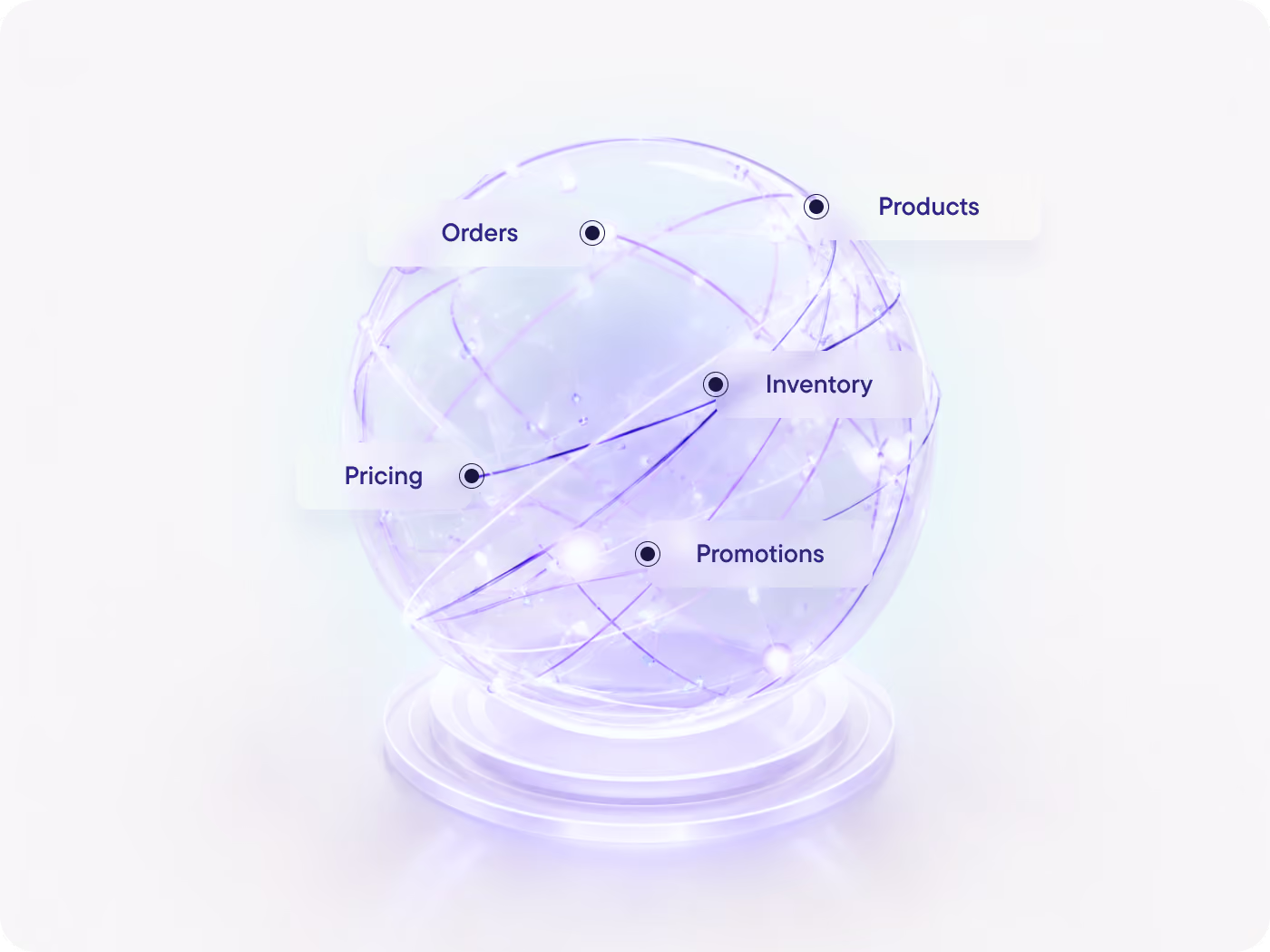
commercetools Sphere unifies product, pricing, inventory and order data into a single real-time system of record, eliminating sync delays, integration gaps, and stale data that lead to poor decisions. API-first by design, it supports millions of pricing decisions, personalization requests and inventory checks without breaking performance.
Define the boundaries your systems operate within — minimum margins, discount limits, supplier rules and compliance constraints — and the platform enforces them on every agent action. Built-in role-based access and full audit trails ensure control, transparency and accountability.

Autonomous commerce requires massive volumes of real-time decisions, from pricing updates to personalization and inventory checks. commercetools provides the infrastructure to handle this scale natively, so you don’t have to engineer for it.

The gap between what commerce teams can manage manually and what modern markets demand is widening every day. Analysts are clear: CEOs are recognizing AI as a catalyst for rebuilding the enterprise. Autonomous commerce is where that transformation begins.
of CEOs say AI will force operational capability overhauls.
of CEOs expect their organizations to operate primarily without human intervention by 2028 (up from virtually zero today).
of consumer-facing commerce functions are expected to be fully automated by 2030.
of cross-functional supply chain solutions will use autonomous agents to execute decisions by 2030.
Thought leadership and resources to dive deeper.
Traditional automation follows fixed, pre-coded rules: “If stock drops below X, send an alert.” Autonomous commerce uses AI to interpret complex, real-time signals and make context-aware decisions, handling edge cases and changing conditions that rigid rules cannot anticipate.
Agentic commerce refers to AI agents acting on behalf of consumers, helping shoppers discover, compare and purchase products. Autonomous commerce refers to the merchant’s own systems acting autonomously: Managing pricing, inventory, campaigns and operations without manual intervention. Both are part of the AI-driven commerce landscape, but they operate on different sides of the transaction.
Yes, when built on a platform with proper governance. commercetools’ architecture includes configurable guardrails, policy enforcement, role-based access, full audit trails and rollback capabilities, ensuring every autonomous action stays within boundaries defined by your business.
Humans define the goals, the guardrails and the exceptions. Autonomous systems handle routine execution within those parameters. High-stakes or out-of-bounds decisions are escalated for human review. The model is designed to augment your team, not replace its judgment.
The primary risks are data quality, scope creep (agents acting outside intended boundaries) and regulatory compliance. commercetools addresses these through unified data infrastructure, configurable guardrails and built-in audit and explainability tooling. Effective autonomy depends on a “decision stack” that combines data, workflows, governance and human context — not just the AI model itself.
Yes. In B2B, the most immediate use cases are procurement automation, reorder management, contract compliance and dynamic pricing for account-based agreements. The B2B opportunity is significant: Complex, rules-heavy buying workflows are well-suited to autonomous execution within defined parameters.
Join 500+ enterprises already running on commercetools.