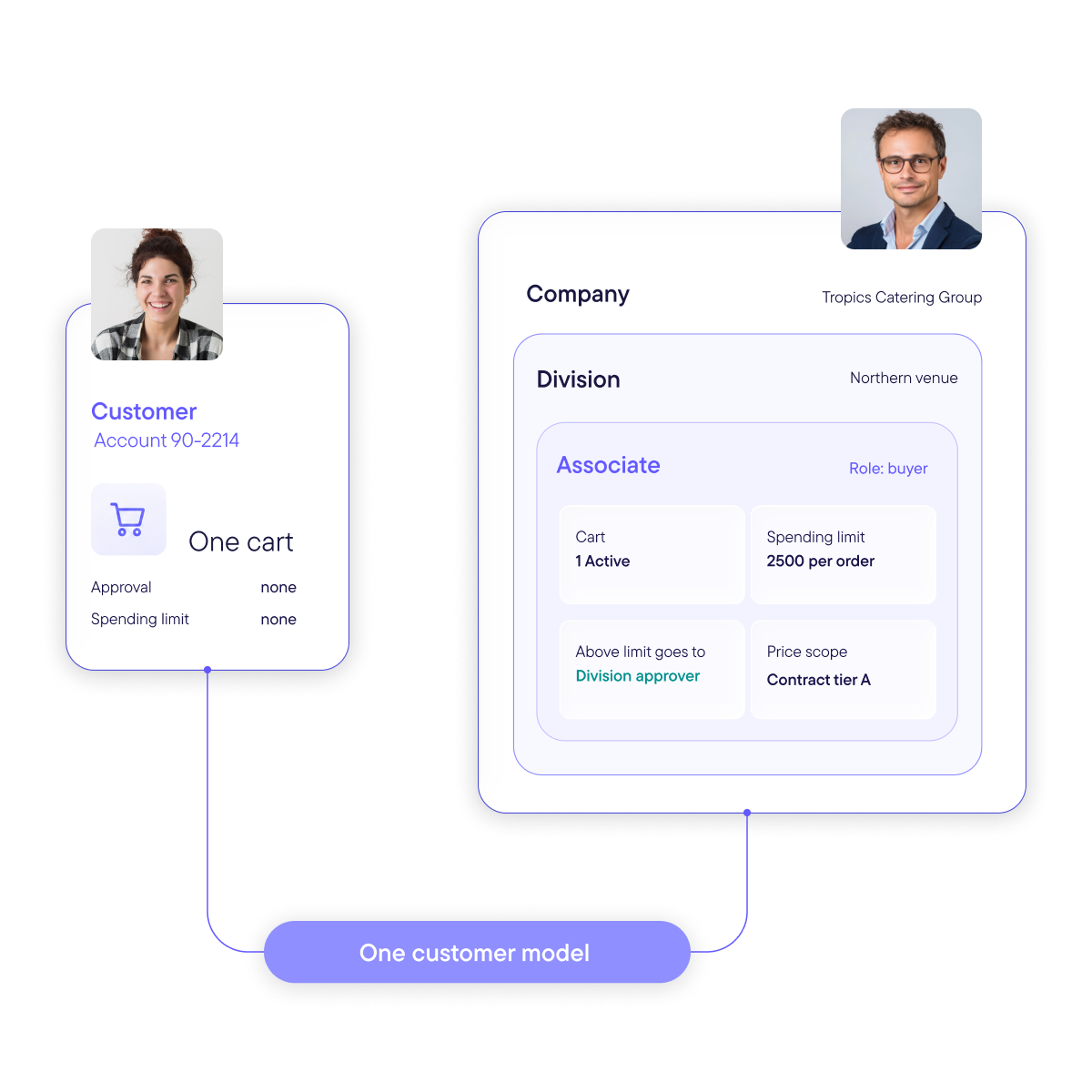






One customer model for shoppers and for the companies that buy from you

Hold every buyer profile in one place. Map corporate structures as they actually exist. Control exactly who can quote, spend and approve.

Contact us
Trusted by global enterprises

B2C is a shopper. B2B is an organization. Manage both without breaking your tech stack.

A B2C shopper is one person with one basket. A B2B buyer is an employee, inside a division within a company, with a spending limit, a negotiated catalog and a manager who signs off. Customer & Business Management holds both in a single model, so personalization, permissions and negotiated pricing all resolve from the same place.

Included in B2C Commerce, B2B Commerce, B2X Commerce and Core Commerce.

Corporate structures mapped natively

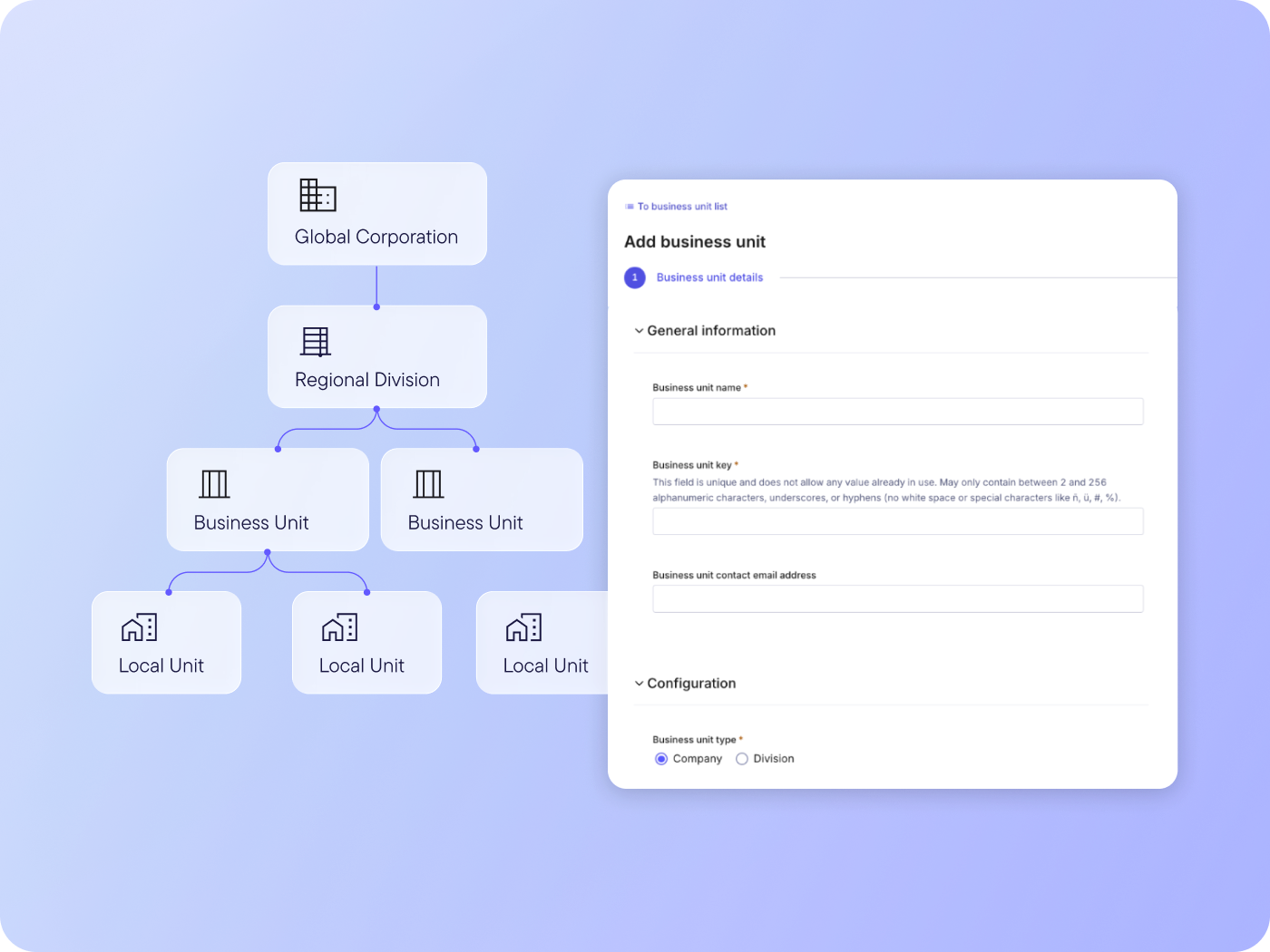
Companies, regional divisions and local subdivisions extend up to five levels deep, with a single top-level unit supporting up to 4,000 divisions. Enterprise buyers organize teams, budgets and purchase histories the way their business actually runs.

Rogue spending designed out 

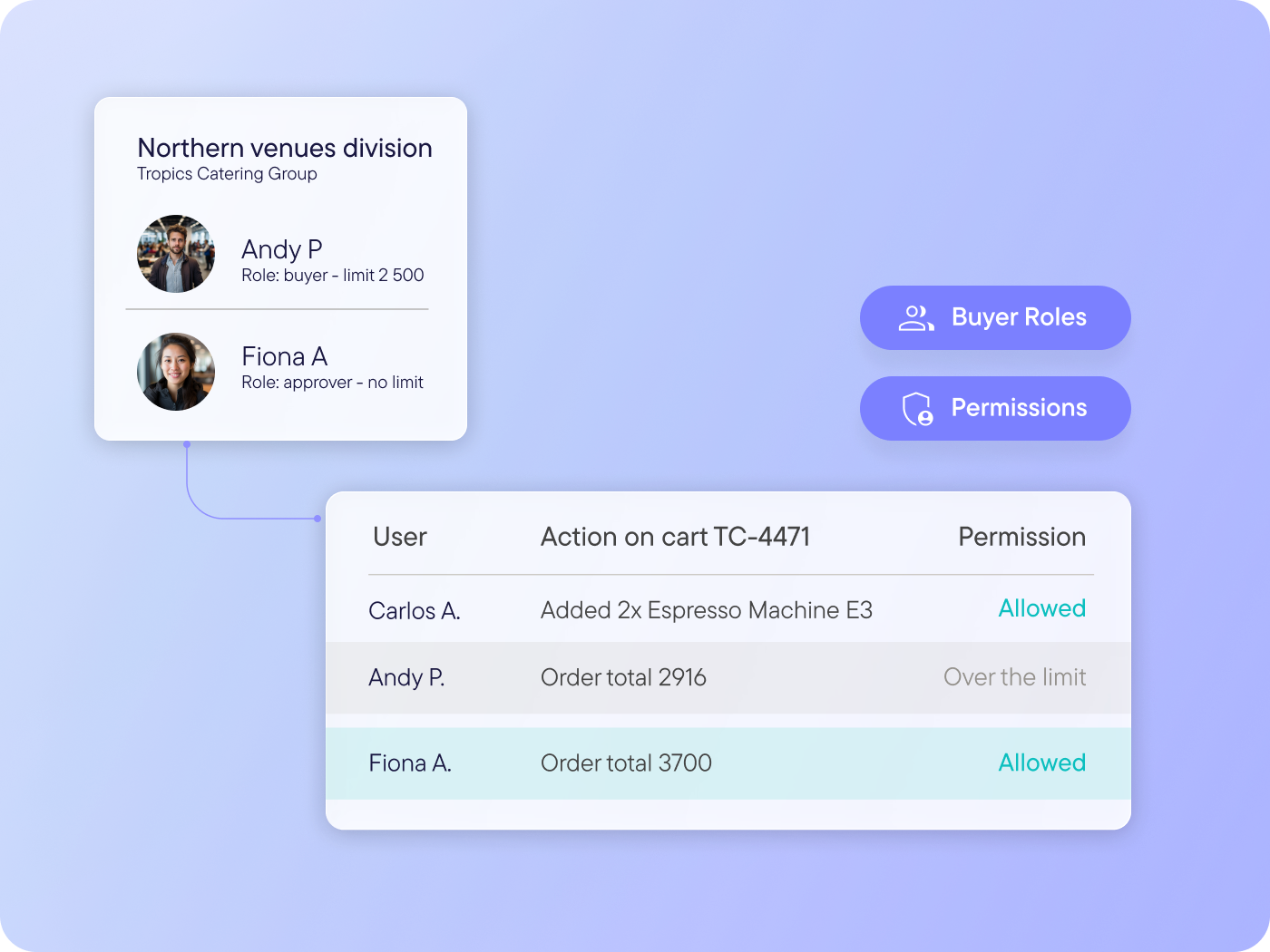
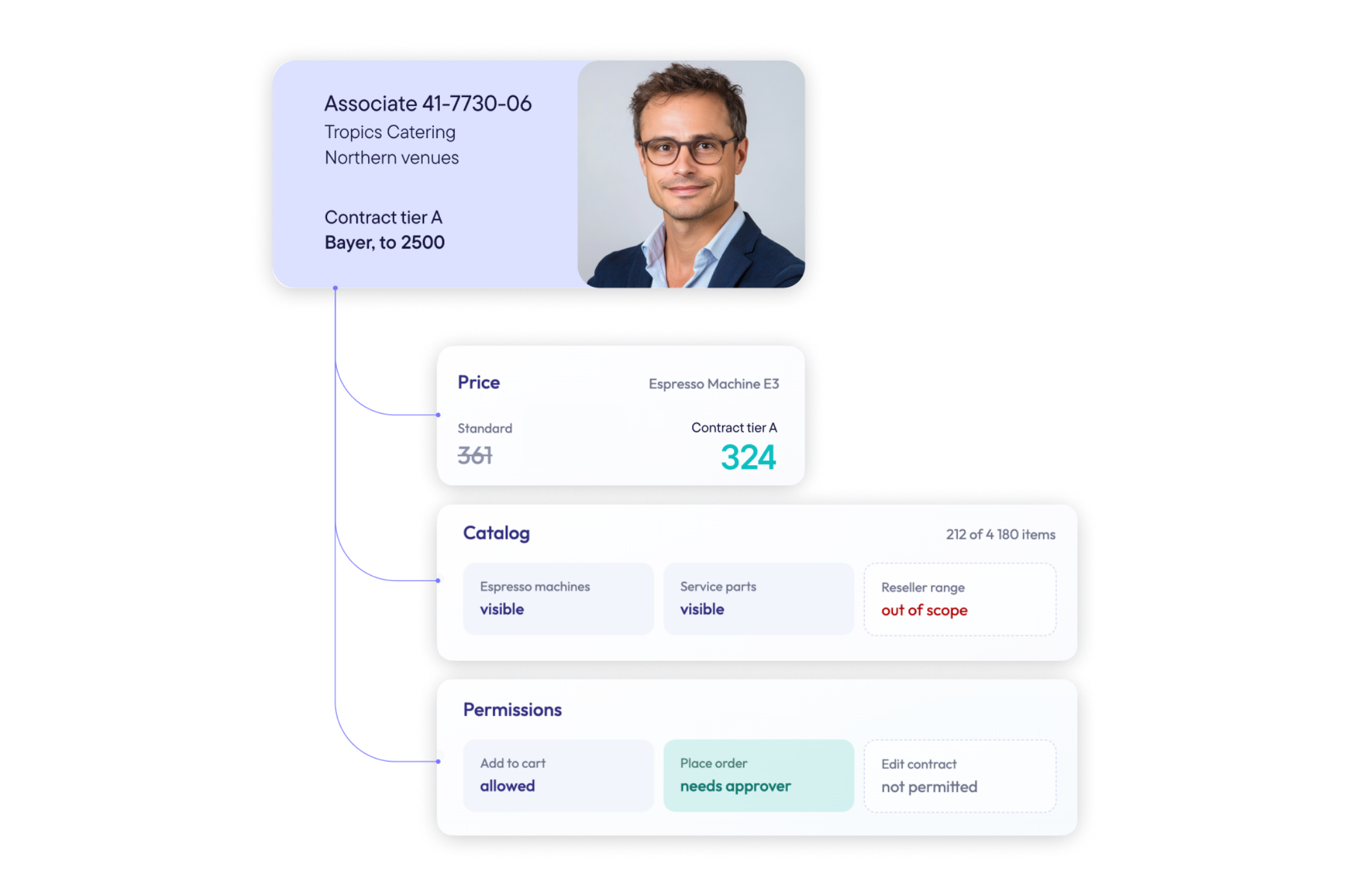
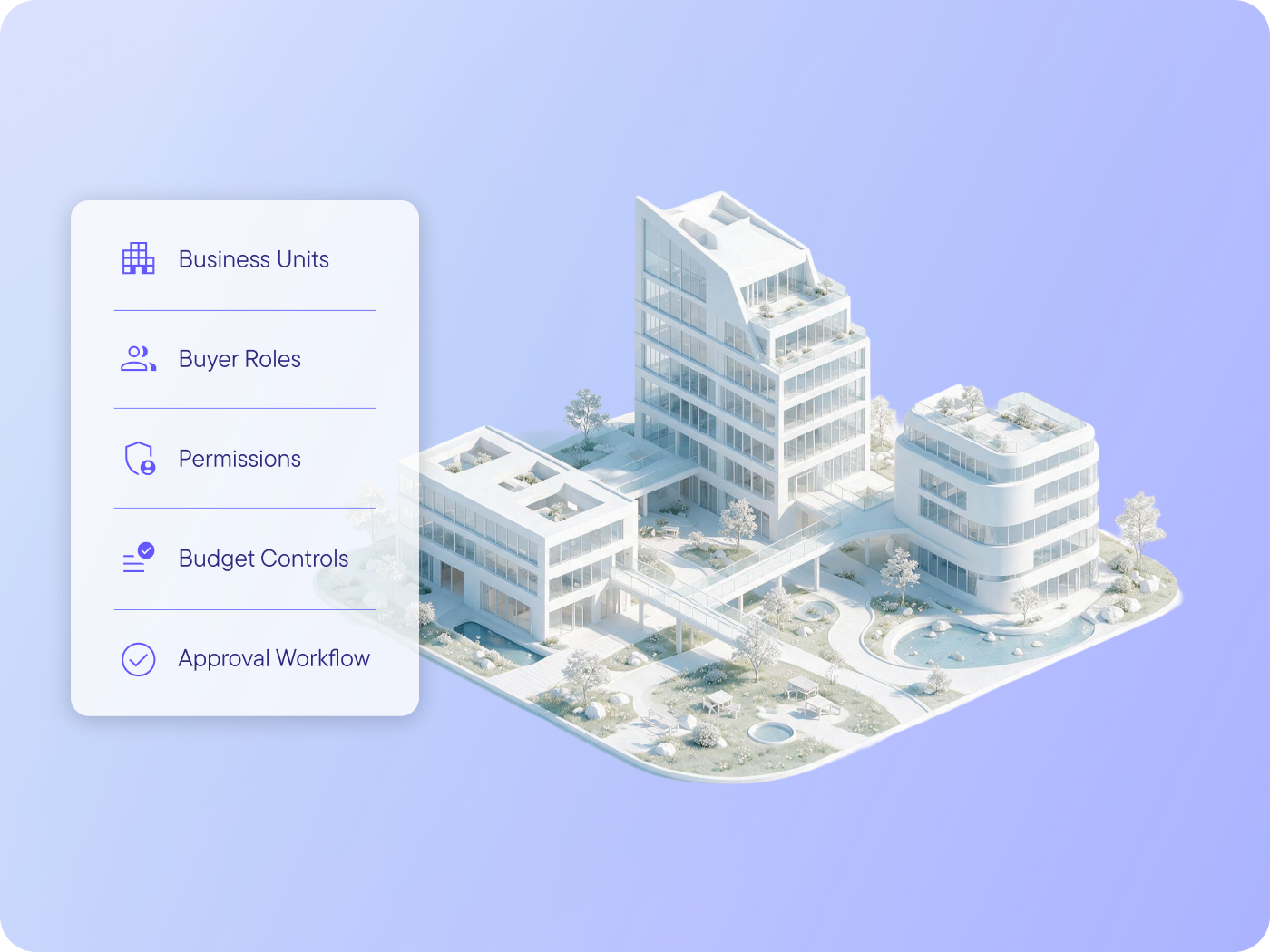
Granular associate roles define exactly who can view a catalog, build a quote, modify a shared cart or approve a purchase. Compliance rules are enforced by the platform automatically rather than by managerial oversight, which removes both the risk and the manual work.

Personalization that resolves at login 

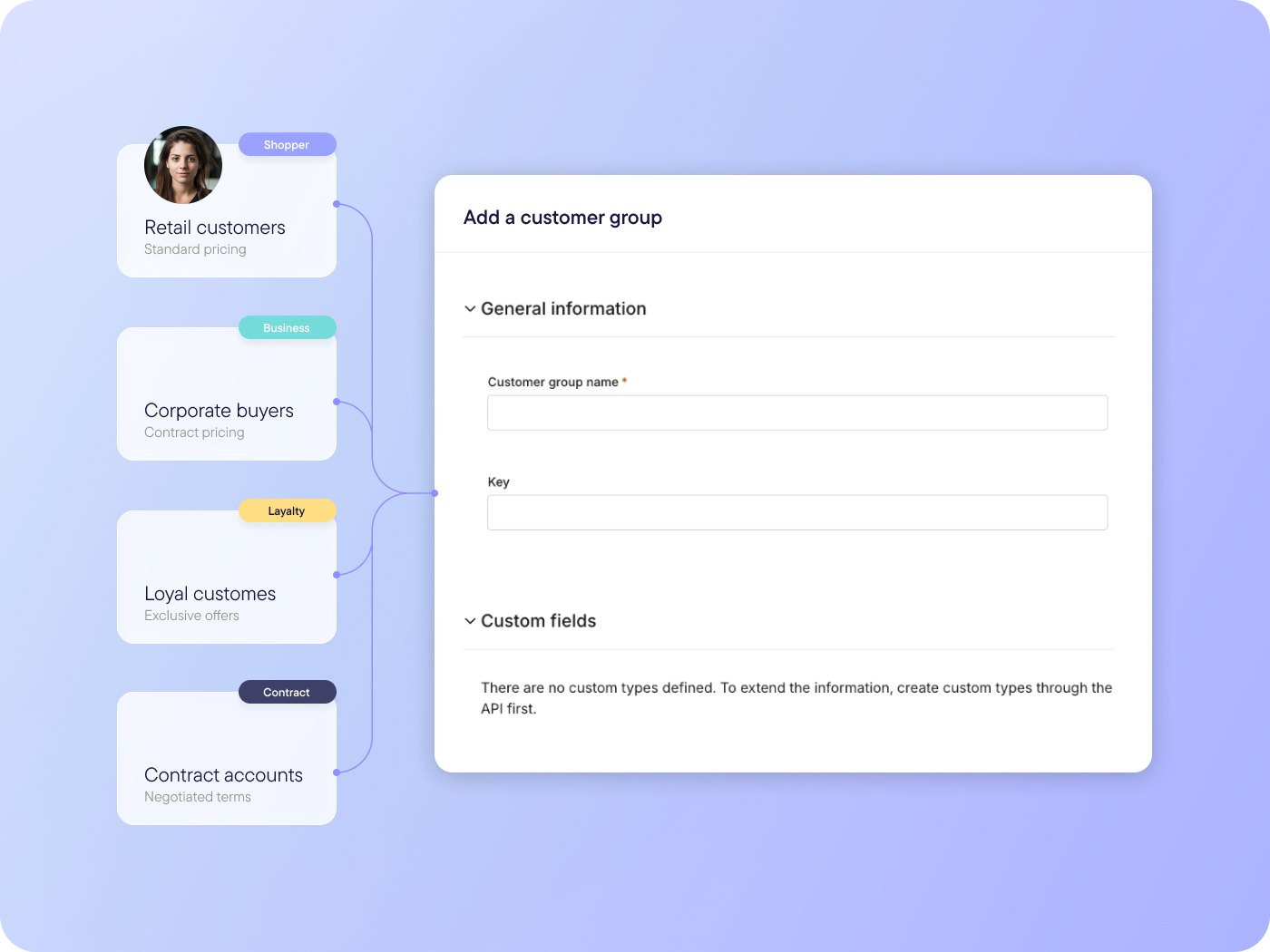
Customer groups tag buyers by loyalty tier, contract or segment, and the platform uses those tags to control catalog visibility and apply the right prices. Buyers see their negotiated terms the moment they sign in, without an additional personalization engine bolted on top.

Identity, hierarchy and permission in one model

01

Corporate account hierarchies: Enterprise procurement mirrors the enterprise

Business units map top-level companies alongside regional divisions and local subdivisions, so the purchasing structure matches the corporate footprint rather than being flattened to fit a template.
‍

Granular purchasing permissions: Procurement policy becomes executable

Precise, customizable roles assigned to individual associates control catalog visibility, quote creation, shared cart access and final approval authority, with up to five role assignments per associate.

Buyer segmentation and grouping: Higher conversion from buyers who see the right thing immediately

Shoppers and corporate buyers are tagged into customer groups by profile, loyalty tier or negotiated contract, and those groups drive tailored catalog visibility and applied discounts.

Assisted service: Fix the order while the customer is still on the phone

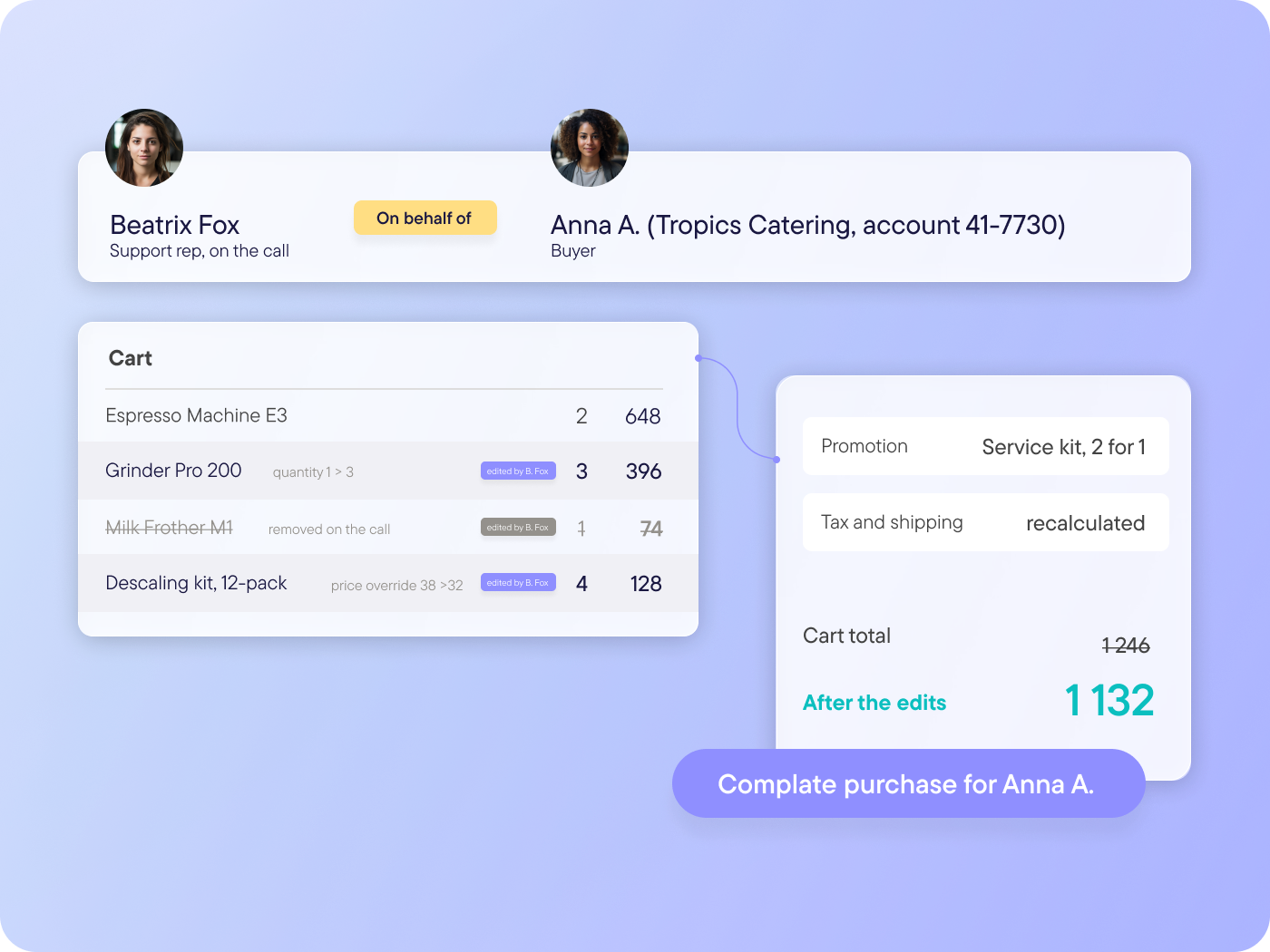
Sales and support reps can open a live cart, add or remove items, apply a price override, correct a shipping address, adjust a discount and complete the purchase on the buyer’s behalf. They work with the buyer’s own prices and promotions applied, so nothing has to be recreated or recalculated in a separate tool.

Shared carts across a buying team: Collaborative B2B purchasing without custom validation logic

Permissions allow one employee to modify a cart or quote owned by a colleague in the same division, with the platform validating entitlements natively rather than a mid-tier service you build and maintain.

‍

WHY COMMERCETOOLS 

Customer models running at enterprise scale

What Customer & Business Management supports

10M

customers per project

10K

customer groups

5

hierarchy levels with 4,000 divisions per top-level unit

2K

associates per business unit

Explore more commerce capabilities

Cart & Order Management

Capture the sale, however complex.

Explore

Pricing

Every market’s price, selected automatically.

Explore

Promotions

Discount precisely, without giving away margin.

Explore

Frequently asked questions

Is the Customer & Business Management capability a CRM system?

No. This capability holds commerce profiles, hierarchies and purchasing permissions. It does not replace your master customer database or the sales and marketing workflows that a CRM owns. This capability can integrate seamlessly with CRM systems.

Is this an identity provider?

No. It authenticates commerce sessions, but enterprise login management stays with your IdP, such as Okta or Auth0.

How deep can a B2B hierarchy go?

Five levels. One top-level business unit supports up to 4,000 divisions, including all direct and indirect children, with up to 2,000 associates per business unit.

How many customers and segments does it support?

Up to 10 million customers per project by default, and up to 10,000 customer groups.

Does it meet healthcare compliance requirements?

Yes. The platform is HIPAA-compliant for healthcare-focused US markets with Business Associate Agreements, explicitly covering the Customers, Business Units and Customer Groups APIs.

Have questions?

Talk to our team about your commerce requirements.

Contact us
Get in touch

The Digital Commerce AI Company

Join 500+ enterprises already running on commercetools.