
ABOUT OMNICHANNEL COMMERCE

Deliver seamless experiences across every customer touchpoint

Shopping happens everywhere. Omnichannel brings all channels together into a seamless journey.

Contact us

What is omnichannel commerce?

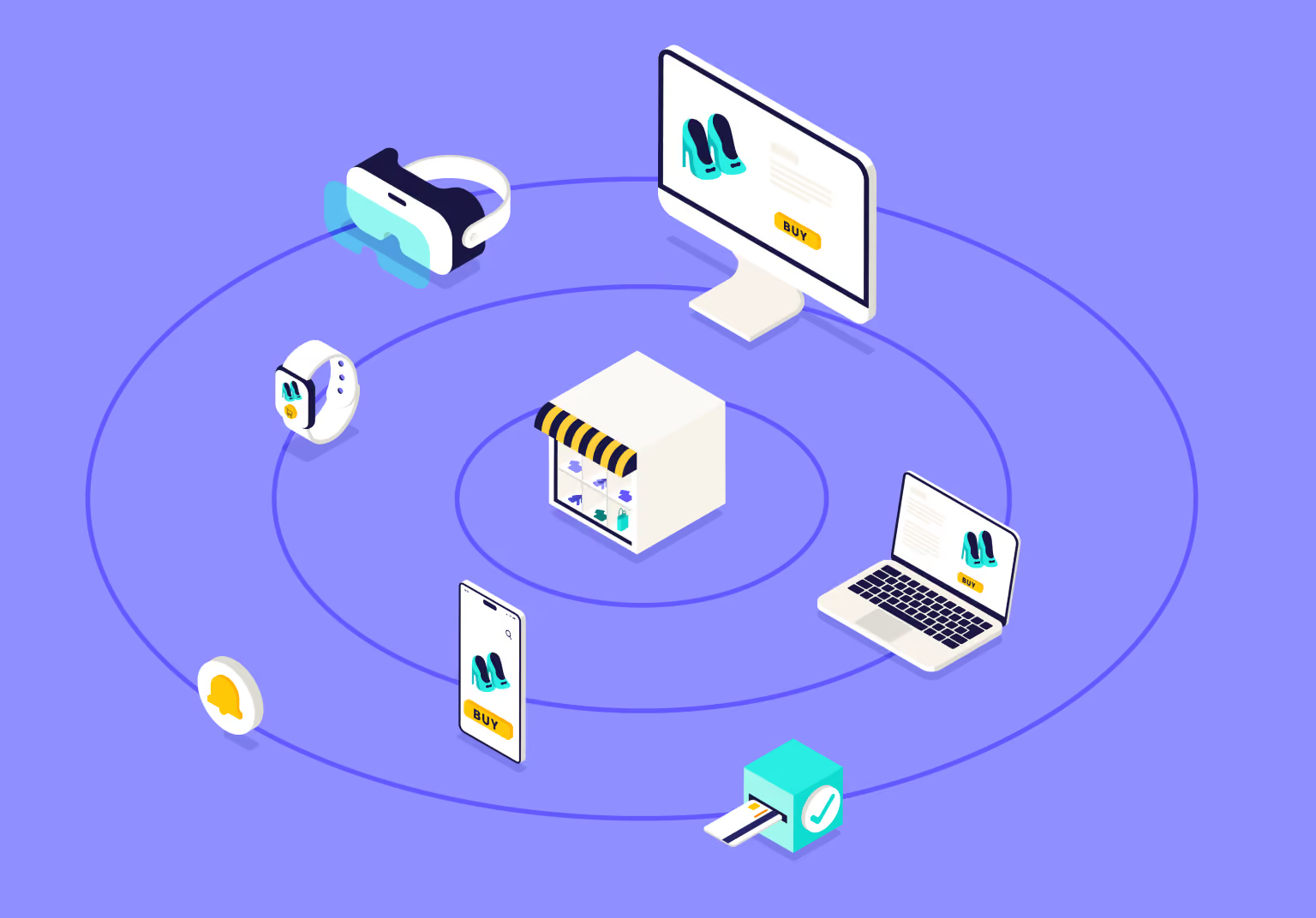
Omnichannel commerce is a retail approach that connects all customer touchpoints — online, mobile, in-store, and beyond — into one unified experience. It ensures customers can move seamlessly between channels while seeing consistent products, pricing and service, with full context carried across every interaction.

The benefits of omnichannel commerce 

Omnichannel commerce helps businesses meet customers wherever they are, while driving stronger engagement, efficiency and growth.

Seamless customer journeys

Customers can move effortlessly between online, mobile and store without losing context. They can start a journey on one channel and complete it on another — with consistent information, service and experience throughout.

Higher conversion and loyalty

When customers don’t have to repeat steps or restart journeys, friction drops. This leads to more completed purchases, stronger engagement and increased long-term loyalty.

Real-time consistency across channels

Product availability, pricing and customer data stay aligned everywhere. This creates trust and removes uncertainty — whether a customer is browsing online or standing in-store.

Flexible fulfillment options

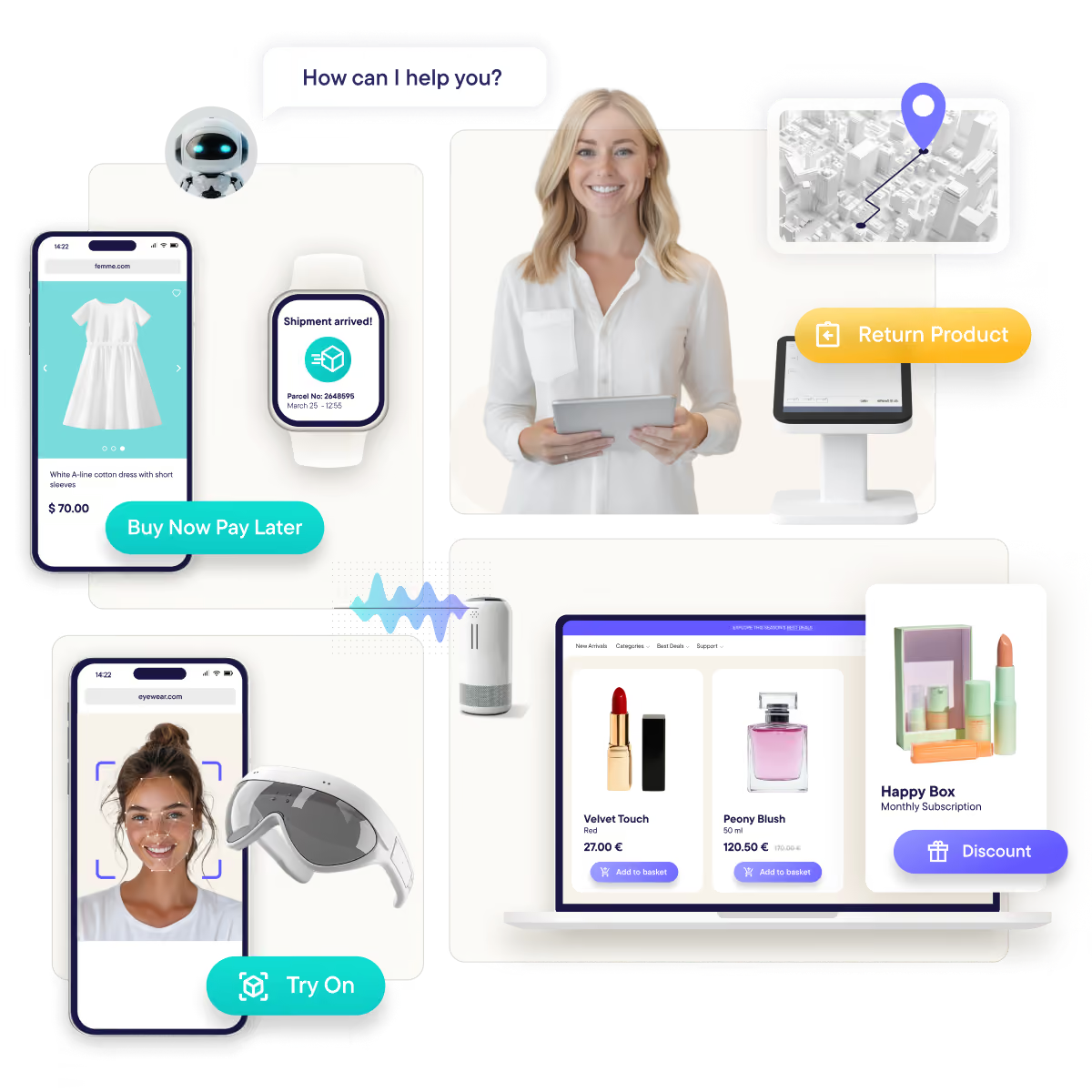
Buy online, pick up in store, ship from store or return anywhere. Omnichannel enables convenience-driven experiences that match how customers want to shop today.

Better operational efficiency

Unified systems reduce silos between channels, improving inventory management, order routing and service workflows — helping teams operate more efficiently at scale.

Smarter use of customer data

Connected touchpoints give businesses a complete view of customer behavior across channels. This enables more relevant experiences, improved decision-making, and better forecasting.

Omnichannel for B2B digital commerce 

B2B buyers expect the same ease and flexibility they experience as consumers. Omnichannel commerce brings digital self-service, sales-assisted selling and account-based purchasing together into one continuous journey.

Omnichannel buying experiences

Give customers and sales teams a shared view of products, pricing and availability across all channels. Enable self-service and assisted selling to work together, not in parallel.

Account-based consistency

Ensure contract pricing, negotiated terms and product catalogs are consistent across every interaction a buyer has — from eCommerce portals to sales tools.

Continuous purchasing journeys

Enable buyers to move seamlessly between channels, picking up where they left off — with shared carts, order history and account context across every interaction.

Hybrid sales

Unify sales-led and self-service buying in one system. Enable reps to handle complex deals while customers independently complete straightforward purchases through digital channels.

How to enable omnichannel experiences with commercetools

Build connected commerce experiences across every touchpoint — from digital channels to in-store and emerging AI-driven interactions.

B2C Commerce

Deliver seamless B2C journeys across digital and physical channels with connected product, pricing, inventory and customer data.

Explore product

B2B Commerce

Support complex B2B buying journeys with connected account structures, contract pricing, approval flows and self-service purchasing — all aligned across channels and sales teams.

Explore product

InStore

Unify in-store and digital commerce with a modern POS system. Empower associates with real-time product and customer information to support assisted selling, endless aisle experiences and flexible fulfillment in-store.

Explore product

AgenticLift

Extend omnichannel experiences into AI-driven interactions. Enable intelligent agents to access commerce capabilities and support customers through personalized shopping across channels.

Explore product

WHY COMMERCETOOLS 

Leading enterprises delivering omnichannel commerce at scale

Brands, retailers and B2B organizations use commercetools to deliver connected customer experiences.

Pet Valu customer story thumbnail
40%
faster time to market
70%
faster homepage load speed

Pet Valu

Pet Valu improved eCommerce performance and omnichannel orchestration, cutting time-to-market by 40% and boosting homepage speed by 70%.

Jaycar customer story thumbnail

Jaycar

Jaycar unified online and in-store operations, giving associates real-time inventory and customer data to support returns, recommendations and seamless assisted selling in-store.

PLUS Supermarkets customer story thumbnail
+89%
successful order rate
50%
faster webshop

PLUS Supermarkets

PLUS Supermarkets increased orders by 89% after synchronizing all touchpoints and easily introducing new channels using a unified commerce platform.

Resources

Dive deeper into omnichannel commerce 

Thought leadership and comprehensive guides for your omnichannel strategy. 

Frequently asked questions

Learn more about how omnichannel commerce works, its impact and what it means for enterprises.

What are the platforms for omnichannel commerce?

Omnichannel commerce is enabled by platforms that connect product, pricing, inventory, orders and customer data across all channels, allowing consistent experiences across digital and physical touchpoints.

What is eCommerce omnichannel selling?

It’s the ability to sell across multiple channels — such as online stores, marketplaces, mobile apps and physical locations — while maintaining a unified view of customers, products and orders.

How does an omnichannel strategy work in eCommerce?

An omnichannel strategy connects all commerce touchpoints so customers can move between channels seamlessly. Data, inventory and customer context are shared in real time to ensure consistency throughout the journey.

What brands are succeeding in omnichannel right now?

Leading brands in retail and B2B are successfully using omnichannel approaches to unify online and in-store experiences, improve convenience and increase customer loyalty through consistent journeys.

What’s the difference between multichannel and omnichannel commerce?

Multichannel offers multiple, separate channels, while omnichannel connects them into a single, continuous experience where data and context are shared across every touchpoint.

Can omnichannel commerce work for B2B businesses?

Yes. B2B buyers expect the same flexibility as consumers — including self-service ordering, account-based pricing and seamless switching between digital channels and sales teams.

Get in touch

The modern commerce platform for enterprise growth

Join 550+ enterprises already running on commercetools.