Product data, on your terms

Define your own product types and attributes. Run every brand, country and store from a single source of truth. Tailor content per market without duplicating a thing.

Talk to an expert
Trusted by global enterprises

Depth that other catalogs can’t model. Product structure that every channel can use.

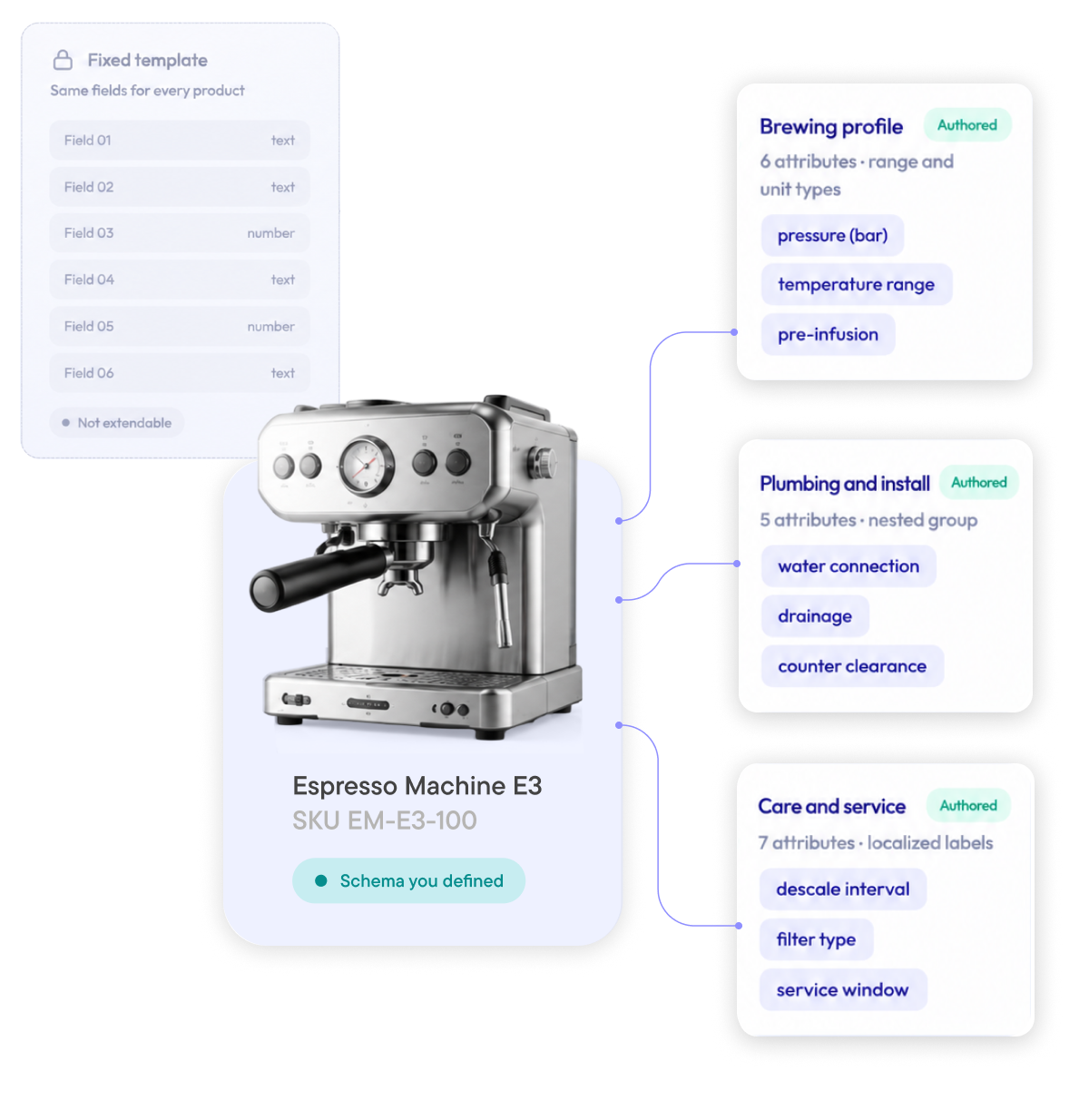
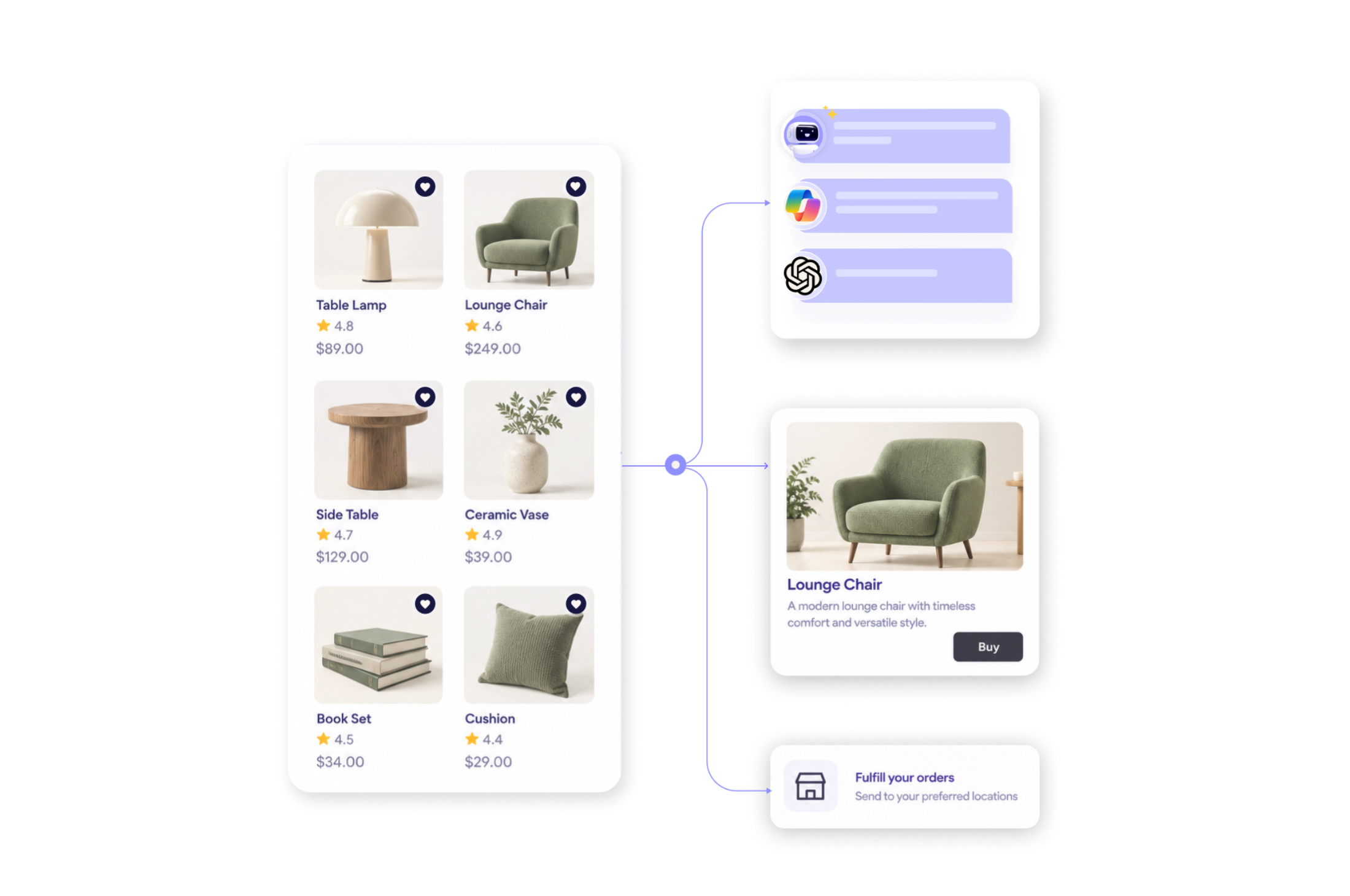
Your own product types and attributes, rather than a fixed schema. Up to 10,000 variants per product. Up to 100 million market-specific content variations. That depth is what feeds every channel: web and app storefronts, physical stores running their own assortments and local content, and the AI agents now shopping on your customers’ behalf. One catalog, one governance model, without channel-specific copies to keep in sync.

Included in B2C Commerce, B2B Commerce, B2X Commerce and Product Catalog Module.

A data model that fits the business on day one

‍Define your own product types, attributes and attribute groups rather than working inside a fixed schema. Fashion sizing, spare-part specifications and food allergen data are each modeled natively, so complex product data stops being crammed into generic custom fields and naming conventions that follow a rigid template.

One catalog, over a thousand assortments

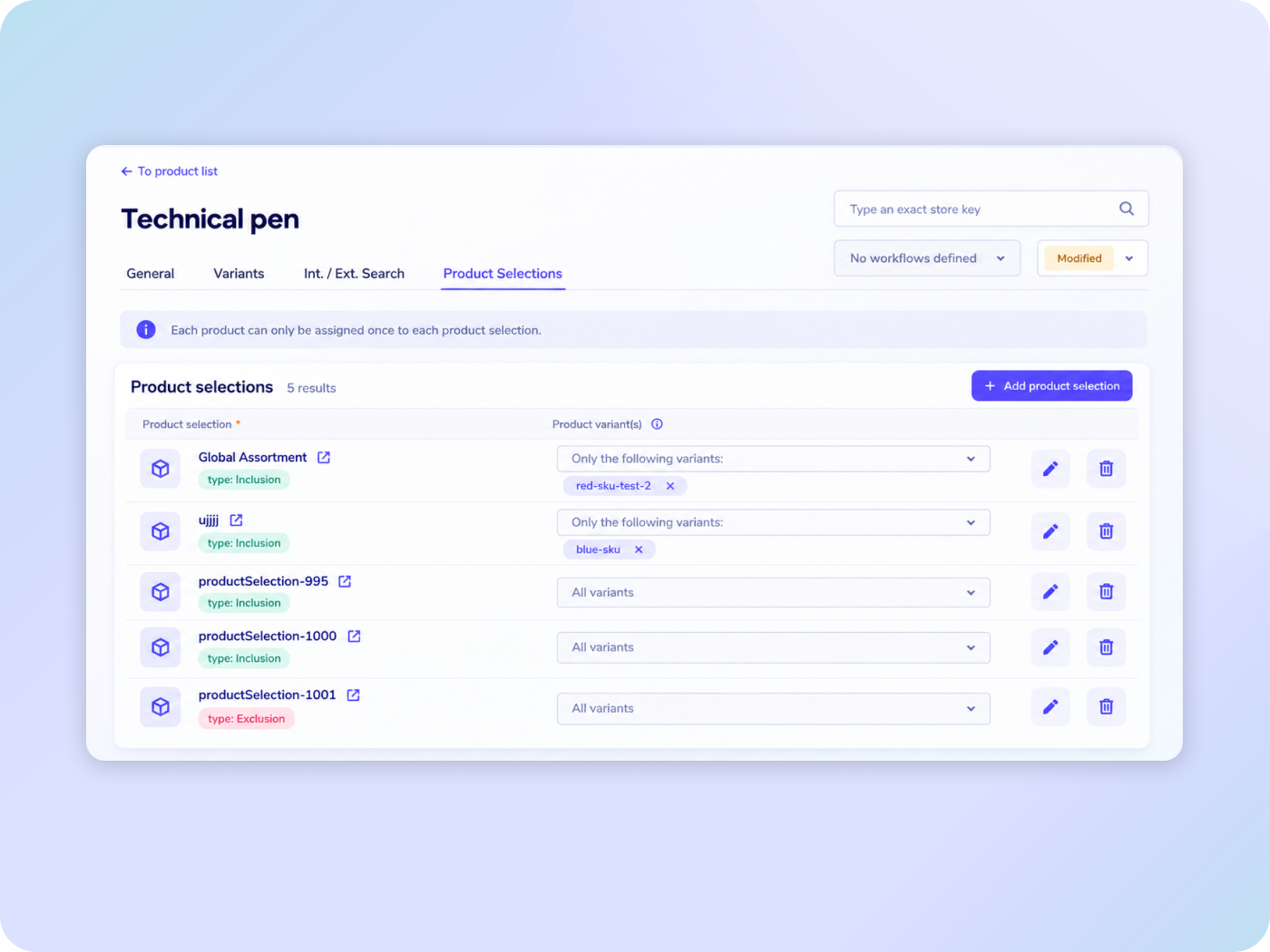
Segment a single catalog into individual assortments per brand site, country or physical store, activated or deactivated per store. Woolworths and Domino’s each run over 1,000 assortments. No duplicated catalogs, no sync jobs, no custom filtering layer.

Market-specific content without cloning

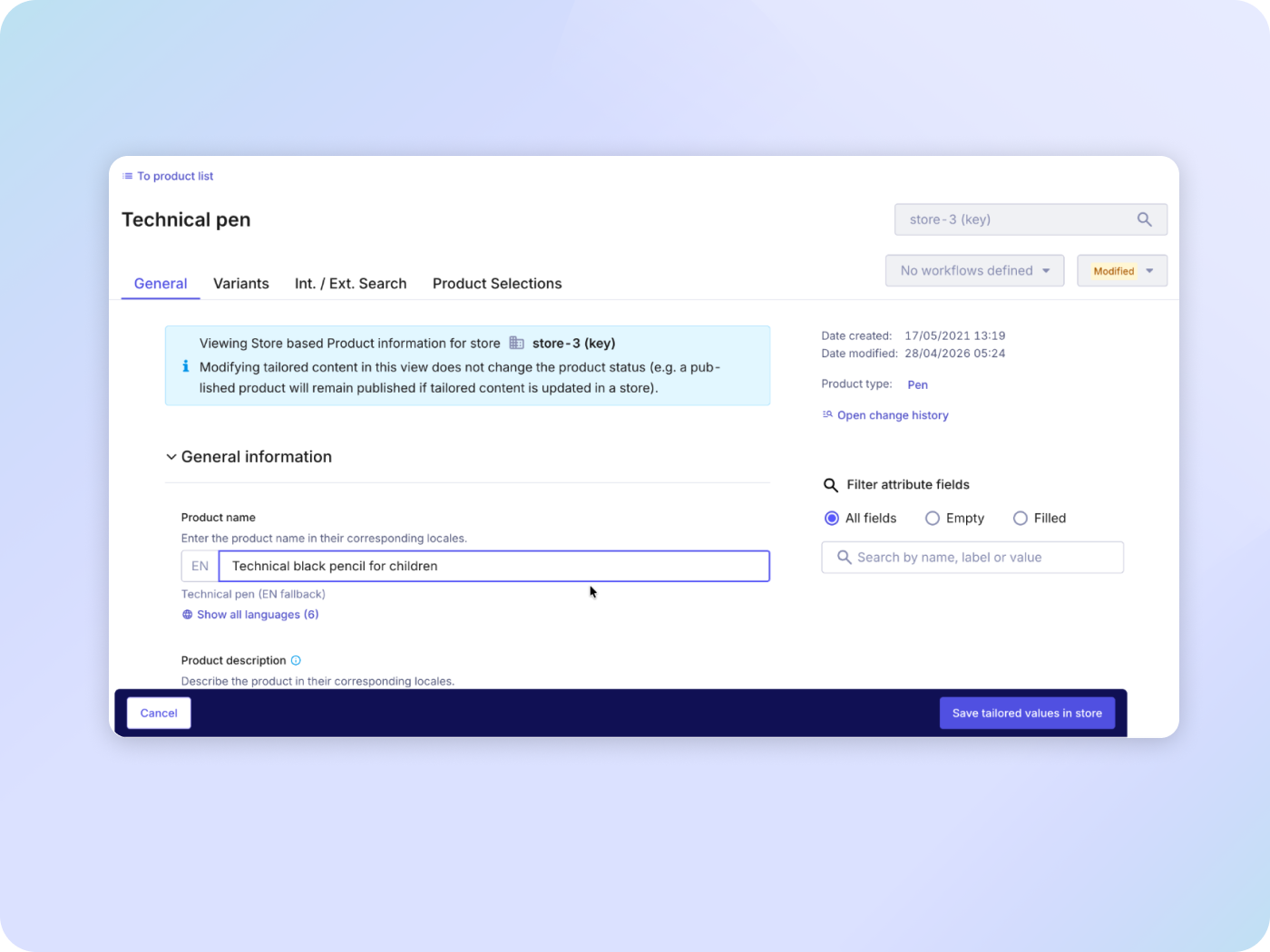
‍Tailor names, descriptions, images and attributes per store and locale, with untailored fields falling back to the original automatically. Content teams change only what differs. Adoption of this capability has almost doubled in the last six months.

High-volume variant handling 

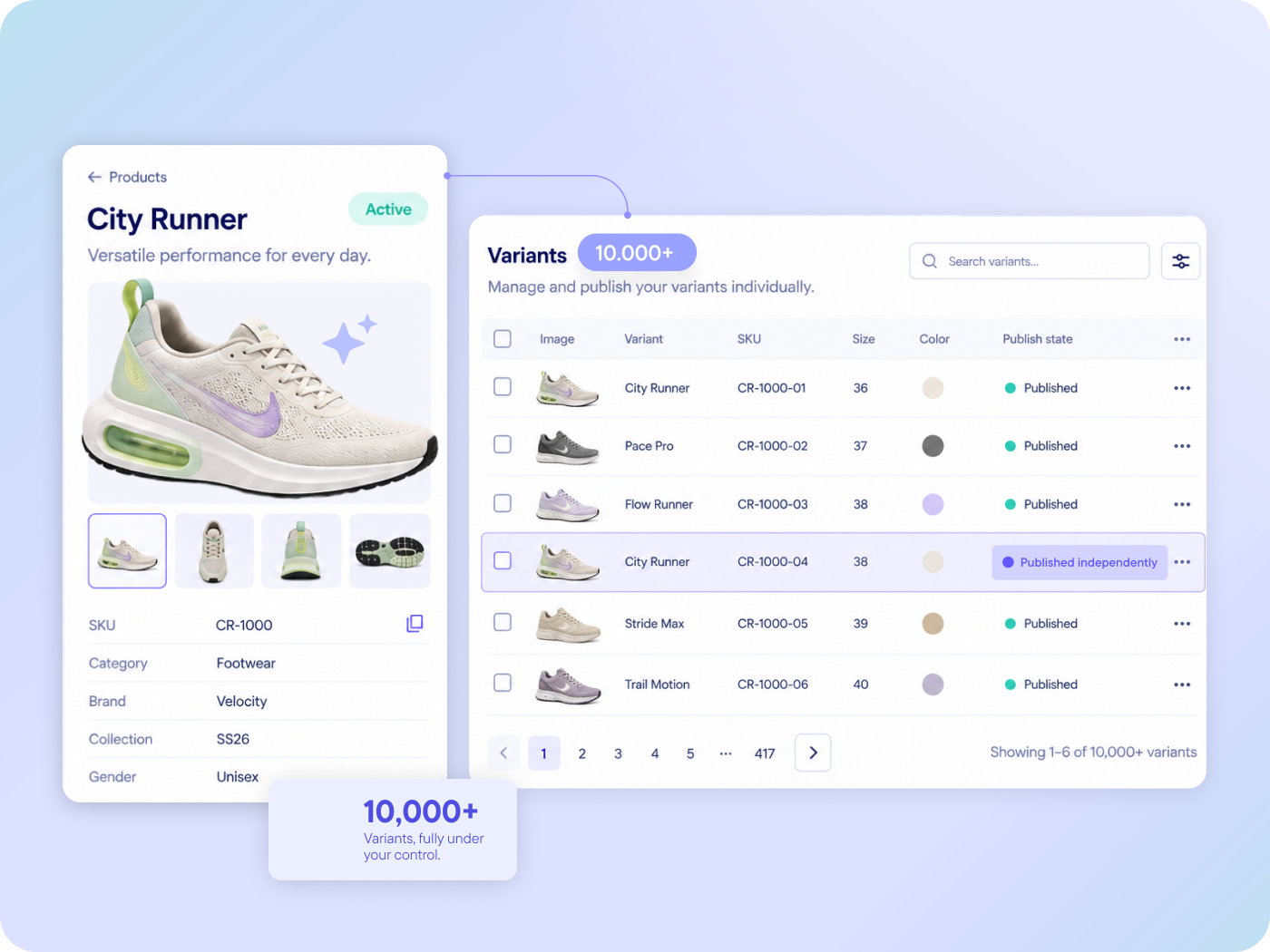
Products stay modeled the way the business thinks about them. Up to 10,000 variants per product with independent variant publishing means a single variant goes live or updates without republishing the whole product, and thousands of size, color and specification combinations don’t get split into artificial structures.

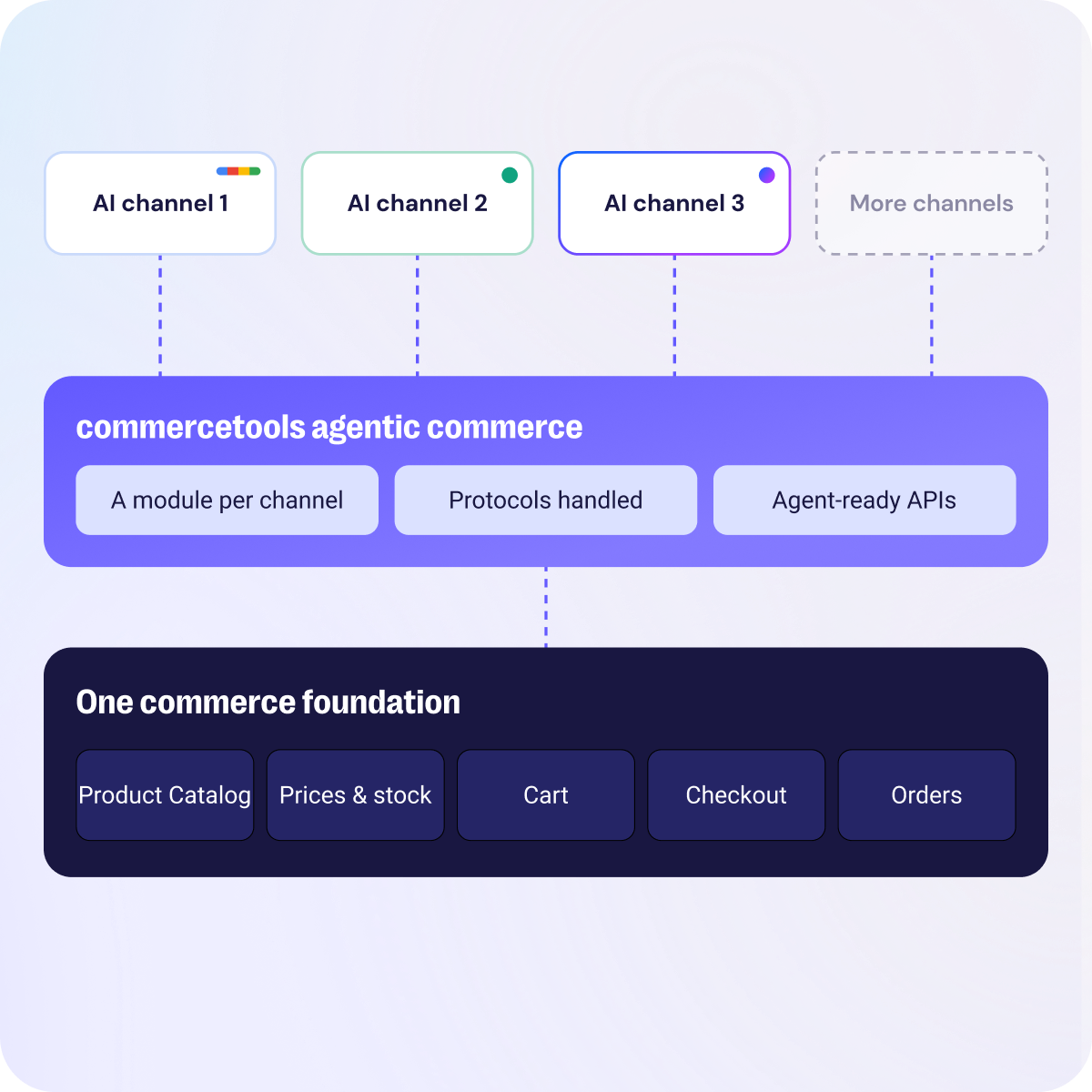
Every AI channel. One commerce foundation.   

Connect to AI channels without rebuilding your commerce infrastructure for each one.

List icon

Meta - Muse AI Shopping

Meta’s Muse is live in the US and UK, with more markets expected this year. Shopping is Muse’s number one use case - over 25% of users ask it to find deals and buy.
‍

Connect your product catalogue through commercetools AI Hub and Meta’s Open Catalog, so your products are discoverable when consumers ask Muse for recommendations. Your product data, pricing and availability flow directly from your commerce core - accurate, structured, and merchant-owned. Start with discovery. Checkout readiness is built in as Meta opens it.
‍‍

Meta determines product visibility and placement in Muse. commercetools helps you connect and get ready.

‍

List icon

Google – Search, AI Mode and Gemini

Google’s Universal Cart is live in the US, letting shoppers add products to a cart directly from AI-powered discovery. 

‍

Start with cart transfer, so customers can complete their purchases on your site. Add native checkout and build momentum towards checkout in Google.

‍

Google determines merchant access to both cart transfer and native checkout. commercetools helps you get ready for these opportunities.

List icon

ChatGPT

Bring your products and commerce capabilities into ChatGPT, helping shoppers discover relevant products directly from an AI conversation.

List icon

Additional AI channels

New AI shopping experiences and standards are emerging all the time. We help you get ready for emerging AI experiences as they rise.

THE INFRASTRUCTURE BEHIND AGENTIC COMMERCE

Model it, segment it, tailor it, publish it

01

Flexible product modeling 

The catalog evolves without a replatform. Product types, attributes and attribute groups are defined by you rather than inherited from a template, so any industry’s data structure is modeled natively and changes as the business changes.

Multi-brand assortment management

Multi-brand and multi-country operations run from one source of truth. Assortments are switched on or off per store, with shared selections covering products that channels have in common, which removes parallel catalogs and the jobs that keep them in sync.

Market-specific content without duplication 

Every market gets exactly the content it needs at a fraction of the effort. Tailored content applies per store and locale with automatic fallback, and flows consistently into shopping lists, carts and orders, with staged changes and publish control.

High-volume variant handling 

Products stay modeled the way the business thinks about them. Up to 10,000 variants per product with independent variant publishing means a single variant goes live or updates without republishing the whole product, and thousands of size, color and specification combinations don’t get split into artificial structures.

AI-assisted data modeling 

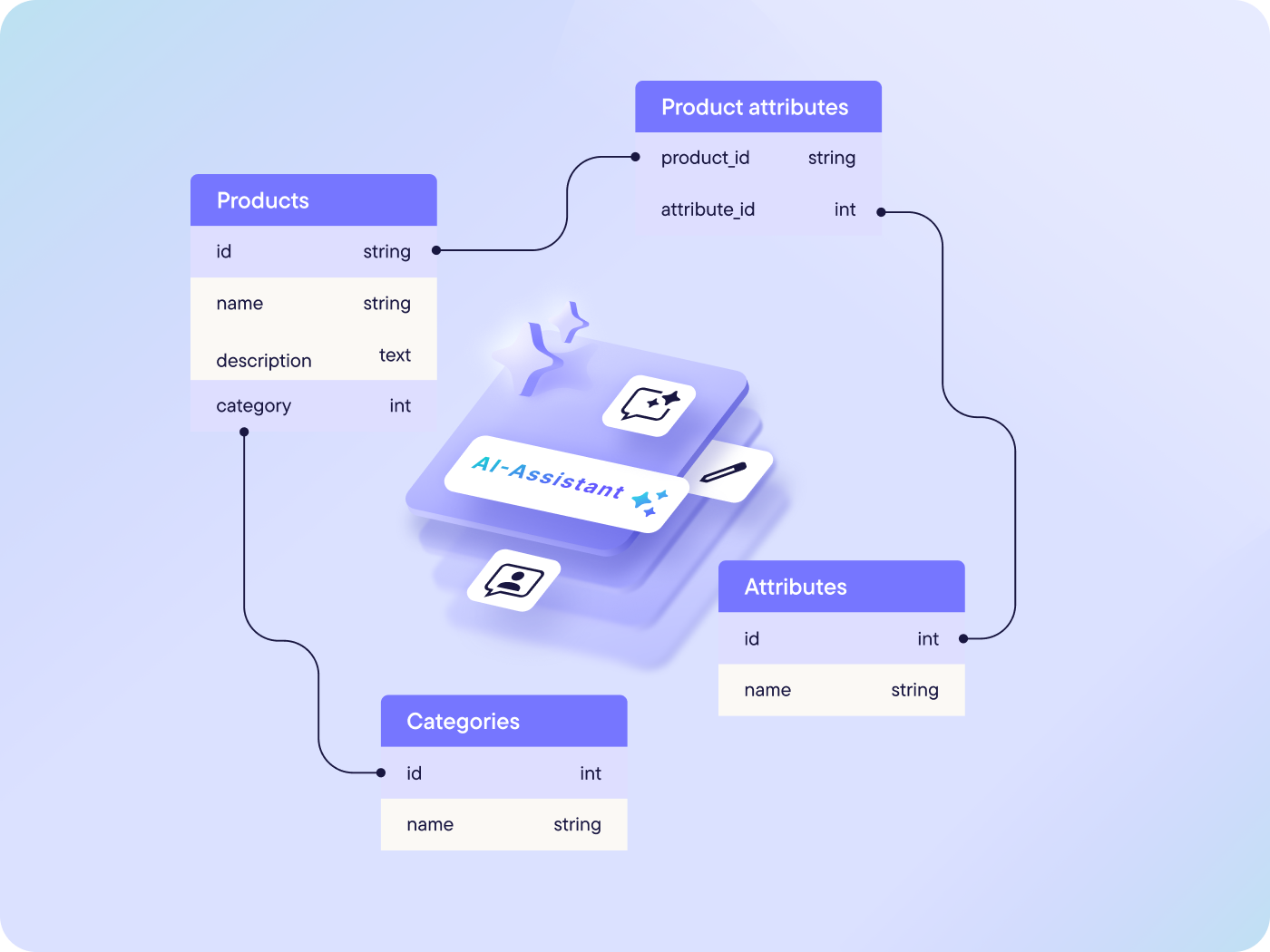
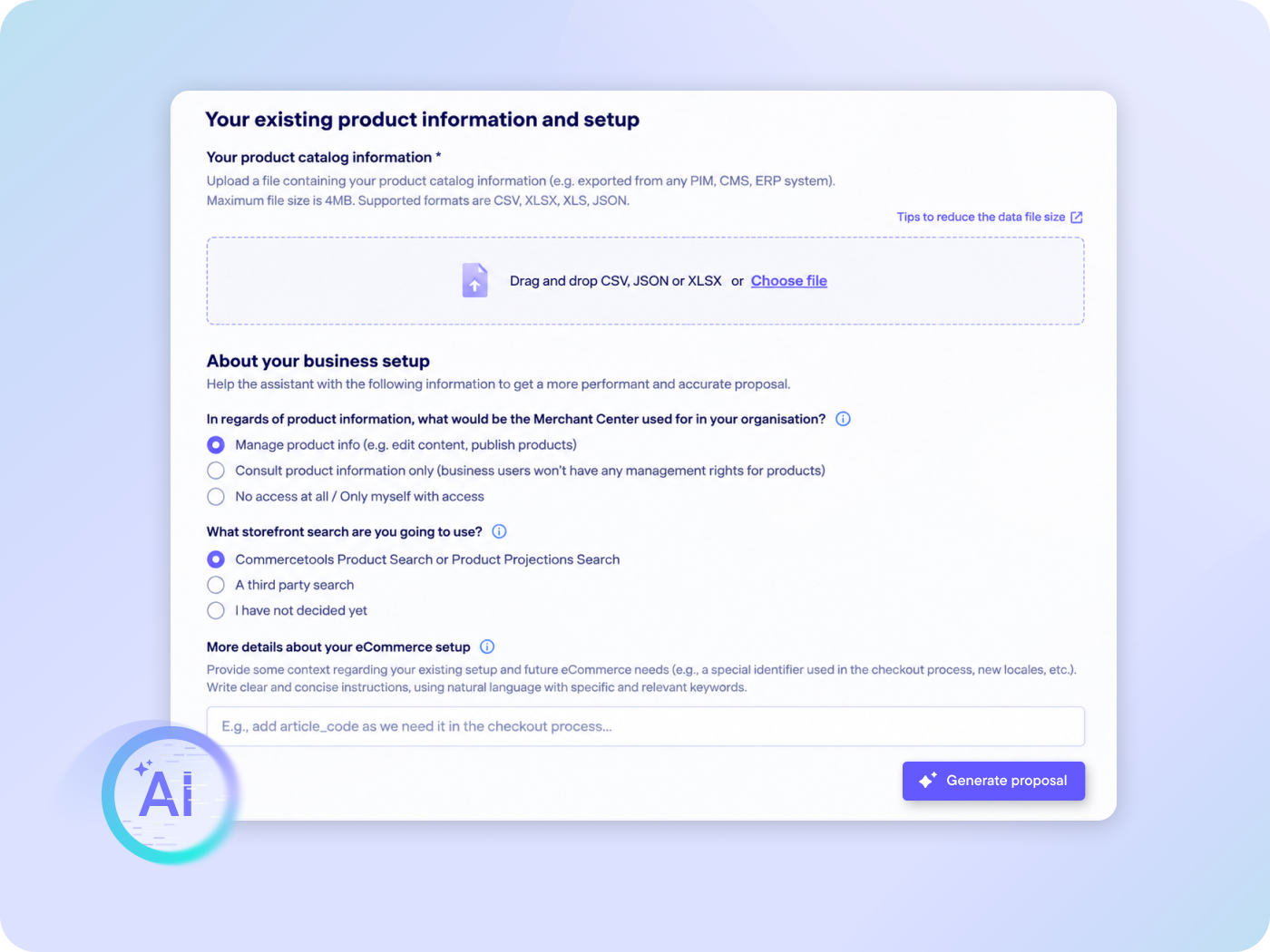
The slowest step of a catalog project stops being the slowest step. Upload a raw catalog export from a legacy system and the Smart Data Modeler proposes a complete data model, with product types, attributes and mappings presented for interactive review before anything is committed to your project.

Product data quality stops being a backlog item

The Product Enrichment Agent analyses your catalog directly in the Merchant Center, scores the quality of existing product data, and proposes improvements for review. Thin descriptions and missing attributes get found and fixed by the team that owns them, rather than surfacing later as a lost sale or an agent that skips your product.

One catalog. Every channel you sell through.

Digital commerce

Web, app and marketplace experiences reading assortment, content and pricing from one source.

B2C Commerce
B2B Commerce

Physical stores

Store-specific assortments switched on or off per location, with local content and language handled by tailoring rather than by a separate catalog.

In Store POS

AI and agent channels

Product data is mapped to agent-ready schemas, so AI channels represent your products accurately instead of guessing from a flat feed.

Agentic Shopping

Run your catalog at scale

95%+

of customers use product data management from commercetools.

≤ 50K

prices per product variant.

≤ 100M

market-specific content variations per project.

Explore more commerce capabilities

Cart & Order Management

Capture the sale, however complex

Explore

Inventory Management

Sell what you have, everywhere you have it

Explore

Search

Shoppers find anything they need

Explore

Frequently asked questions

Can it replace our PIM?

For many commercetools customers, it does. They run day-to-day product data operations directly in commercetools and remove the PIM-to-commerce sync layer entirely: One system, one governance model, faster time to publish. It is not a full PIM suite. Bulk mass editing of hundreds of products still means export and re-import, and there is no built-in translation management, DAM or workflow engine. If those are core to your operation, commercetools works alongside a dedicated PIM rather than replacing it.

Is it available on its own?

Yes, in addition to it being part of our B2C, B2B and B2X products, Product Catalog is available as a standalone module.

How many variants can one product have?

Up to 10,000, with independent variant publishing. Mainstream SaaS platforms cap at roughly a fifth of that.

What compliance does it carry?

SOC 2 Type 2, ISO 27001 and GDPR at the platform level, with HIPAA and BAA available for US healthcare, covering the Products APIs.

Explore how to go agentic without starting from scratch  

Book 30 minutes with a specialist in agentic commerce and explore the options for your business.

Talk to an expert
Get in touch

Run every brand and market from one product catalog

Explore how to define your own product model and tailor content per market without duplicating data.