
ABOUT TCO IN COMMERCE

Reducing the real cost of running digital commerce

The true cost of digital commerce extends far beyond software licenses. Total Cost of Ownership (TCO) helps organizations evaluate the long-term costs of operating and evolving commerce systems. Explore the key drivers of TCO and how modern commerce reduces it over time.

Contact us

What is TCO in commerce?

Total Cost of Ownership (TCO) refers to the full cost of operating and evolving a commerce platform over time. Beyond licensing and infrastructure, it includes ongoing expenses such as maintenance, upgrades, development, integrations and operational overhead.

While upfront technology costs often receive the most attention, long-term operational costs typically account for the majority of TCO. Understanding these costs helps organizations make more informed technology decisions and identify opportunities to improve efficiency over time.

What drives high TCO in commerce platforms? 

Many commerce systems become more expensive over time due to structural constraints rather than direct pricing.

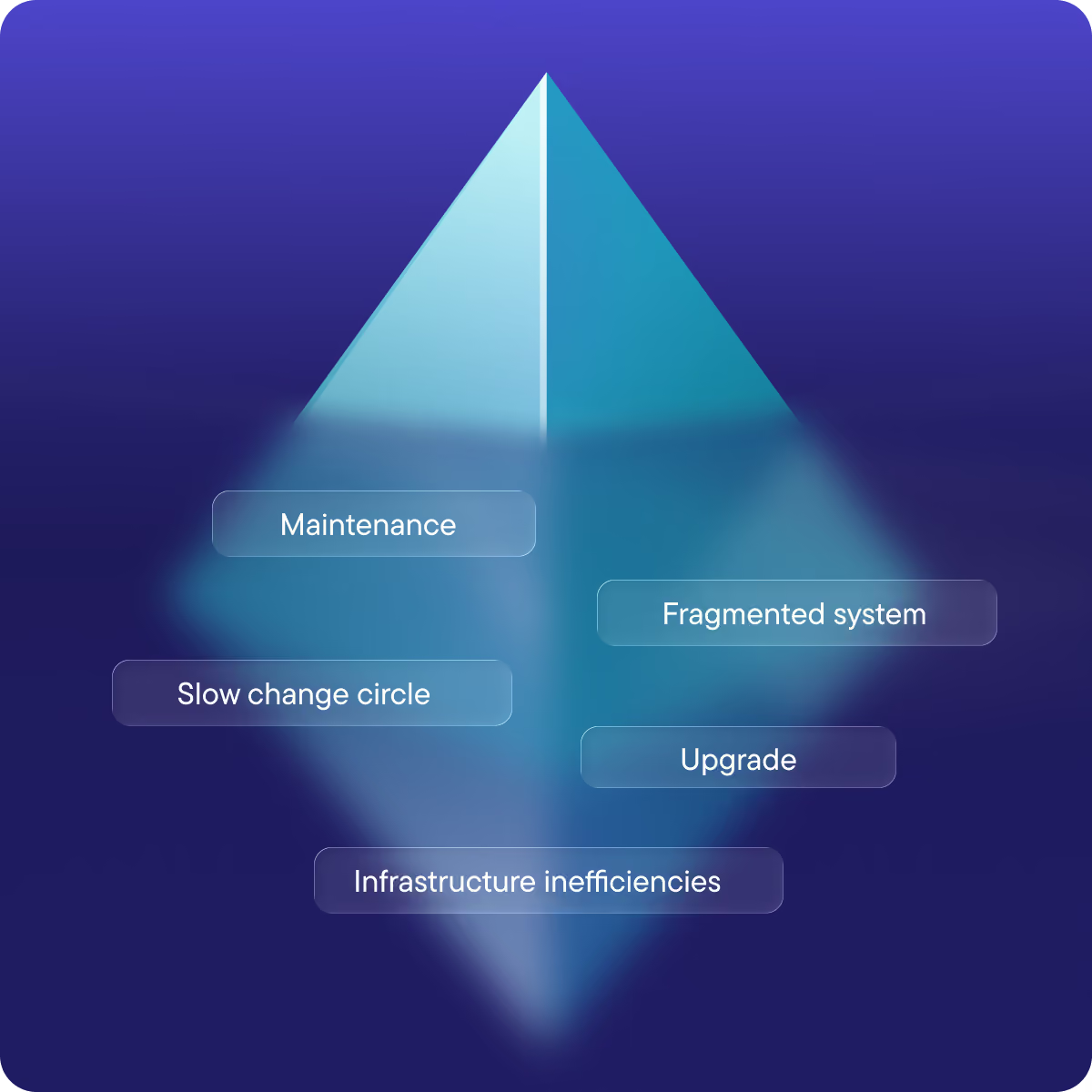
Frequent upgrade cycles

Large, tightly coupled systems often require full-platform upgrades that are costly, time-consuming and disruptive.

Infrastructure inefficiencies

Overprovisioned or inflexible infrastructure leads to unnecessary cost during both peak and non-peak periods.

High maintenance burden

Customizations and extensions often increase system complexity, requiring ongoing engineering effort just to maintain stability.

Fragmented system landscapes

Multiple disconnected tools and point-to-point integrations increase operational overhead and long-term support costs.

Slow change cycles

Heavy dependencies between system components make even small changes expensive and slow to deliver.

Iceberg diagram illustrating the hidden total cost of ownership, with labels for maintenance, fragmented system, slow change cycle, upgrade and infrastructure inefficiencies

How modern commerce architectures help reduce TCO

Modern commerce architectures enable enterprises to reduce TCO by improving long-term efficiency and addressing the structural drivers of cost in their commerce systems. 

Reducing system complexity

Simplifying architecture and reducing tightly coupled dependencies lowers maintenance and operational overhead. Modern commerce architectures also avoid large, system-wide upgrades and instead enable incremental updates. 

Shifting to scalable infrastructure

Elastic, cloud-native scaling helps align infrastructure usage with demand, reducing waste and avoiding overprovisioning. This improves cost efficiency across both peak and low-traffic periods.

Standardizing and centralizing data

Consistent, real-time data access across product, pricing, inventory and customer domains reduces duplication and simplifies integrations, lowering ongoing maintenance effort.

Designing for change

Systems built around independent services allow teams to deliver updates without coordinated, high-cost release cycles, reducing engineering overhead and accelerating delivery.

Designing your commerce for cost efficiency

Build the right solution for your business to support long-term cost efficiency and reduce operational complexity.

B2C Commerce

Deliver scalable B2C experiences with modular capabilities for product, pricing, inventory and customer data. 

Explore product

B2B Commerce

Support complex B2B commerce requirements, including account hierarchies, contract pricing, approvals and self-service purchasing, while reducing system complexity and integration effort.

Explore product

AgenticLift

Add an AI-driven commerce layer on top of your existing stack without introducing heavy replatforming or infrastructure overhead. 

Explore product

WHY COMMERCETOOLS 

Leading enterprises that reduced TCO with commercetools

Enterprises that modernize their commerce architecture often report reductions in both operational cost and engineering overhead.

20%
lower hosting costs

Interflora UK

The flower delivery company modernized digital commerce and saw reduced technical debt and lower hosting costs by 20%.

35%
lower technology operating costs

APG & Co.

After migrating to commercetools, the Australian fashion group reduced overall technology operating costs by 35%.

50%
lower infrastructure costs

Silvan

The leading building materials retailer in Denmark slashed infrastructure costs by 50% and accelerated time-to-market for new features.

Resources

Dive deeper into TCO in eCommerce

Find additional information about TCO in digital commerce. 

Frequently asked questions

Learn more about TCO in eCommerce, its impact and what it means for enterprises.

What is Total Cost of Ownership (TCO) in commerce?

Total Cost of Ownership (TCO) in commerce refers to the full cost of operating and evolving a digital commerce platform over time. It includes not only licensing and infrastructure costs, but also maintenance, upgrades, integrations, development effort and ongoing operational overhead.

What are the main cost drivers of the commerce platform TCO?

The main drivers of commerce TCO include system maintenance, infrastructure usage, upgrade cycles, customization and development effort, integration complexity and inefficiencies caused by fragmented or tightly coupled systems. These costs often accumulate over time and exceed initial platform licensing costs.

Why does commerce TCO increase over time?

Commerce TCO typically increases due to growing system complexity, frequent upgrade requirements, expanding integration landscapes and rising maintenance effort. As platforms evolve, tightly coupled architectures and customizations can also make change more expensive and slower to deliver.

How can enterprises reduce commerce TCO?

Enterprises reduce commerce TCO by simplifying system architecture, reducing integration complexity, adopting cloud-native infrastructure, minimizing disruptive upgrade cycles and using modular approaches that allow independent scaling and updates of capabilities.

What role does modern commerce architecture play in reducing TCO?

Architecture is a key factor in commerce TCO. Modern architectures that separate capabilities, standardize data access and enable independent scaling reduce maintenance effort, lower infrastructure waste, and minimize the cost and risk of system changes over time.

Get in touch

The modern commerce platform for enterprise growth

Join 550+ enterprises already running on commercetools.