
Get in touch
Stay informed
Receive monthly updates on trends, products and growth insights in your inbox.



.png)

For a decade, the commerce industry chased composability. Break the monolith apart, pick the best tool for every job and connect them over clean APIs. It worked. Commerce has never been more flexible at the architecture level.
That flexibility came at a cost, and the people who paid it were the ones running commerce day-to-day: The business users.
Best-of-breed gave every function its own best tool: A PIM for products, a CMS for content, an engine for promotions, a platform for search, a suite for analytics. Each one connects cleanly over APIs. Each one is also its own login, its own interface, its own mental model.
So, to run a single campaign, a single business user has to manage all of them and hold the whole picture in their head. The software is integrated, but the workflow isn’t. Users become the orchestration layer, stitching together systems, context and decisions as they go.
That’s because the interface most teams still work in was built for an older model: Forms, tables, CRUD screens and manual workflows.
In other words, every application presents its own slice of the world and expects the user to assemble the bigger picture. As systems have become more specialized, people have become the integration layer.
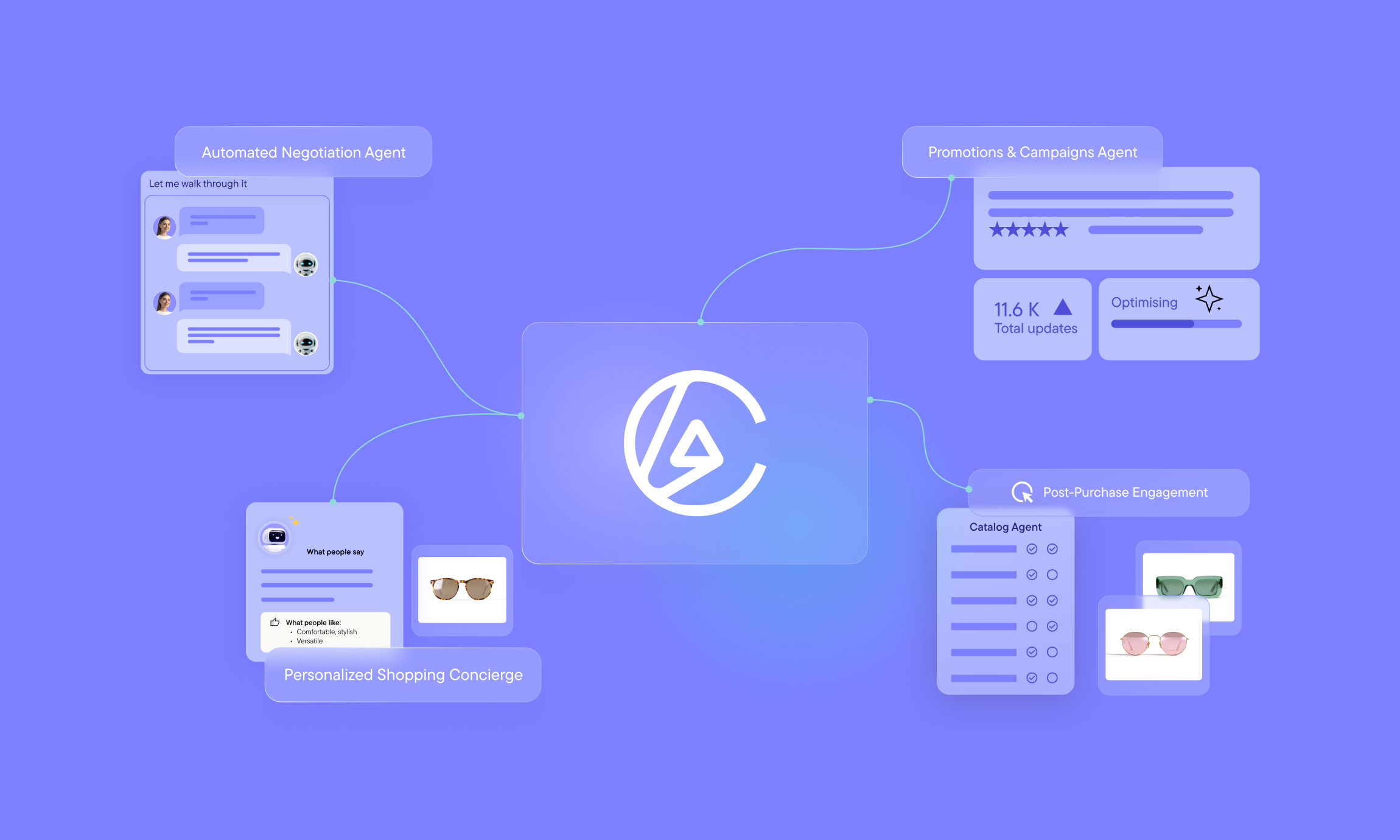
MosAIc is the autonomous orchestration layer for commerce and beyond. There is no dashboard to learn and no menu to memorize. It doesn’t ask users to navigate the structure of the software; it starts with the structure of the work itself.
It opens with a single question: Where should we start?
You describe what you want in plain language: Launch a campaign, prepare a new product line, update pricing across markets, analyze performance or improve conversions. These are just examples of the kinds of outcomes MosAIc can help unlock; the possibilities expand as the orchestration layer understands more of your business, systems and goals.
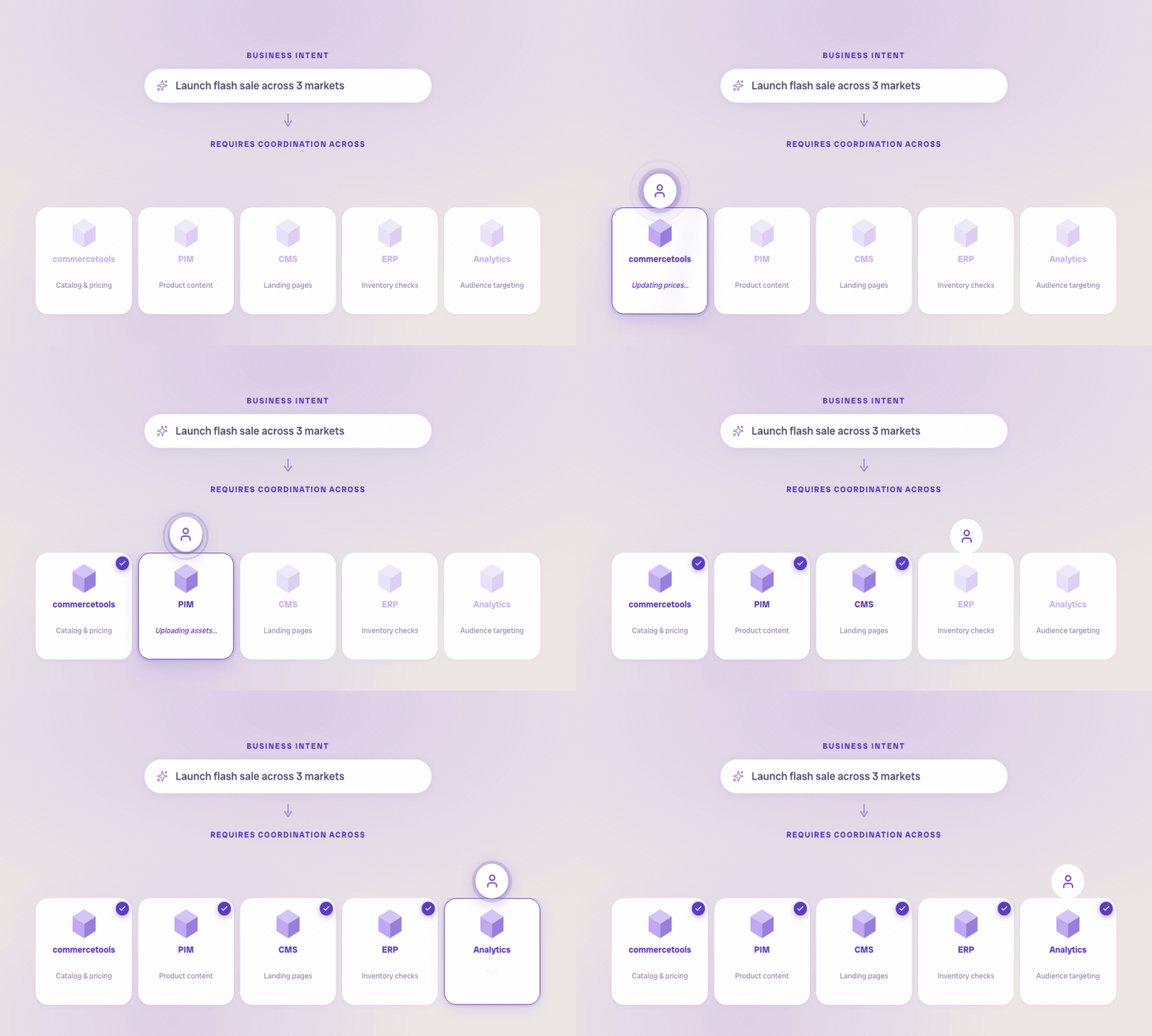
MosAIc works out what the job involves: Which systems need to be involved, what data is required, what decisions need to be made and what actions need to happen next. It understands the relationships between products, content, customers, promotions, data and channels, then assembles the tools, workflows and context required to move the work forward.
Instead of forcing people to translate their goals into the language of applications, MosAIc translates intent into action. It creates the right workspace for the task at hand, brings together the relevant data and capabilities, and guides the user through the decisions that matter.
Two strategic pillars make that possible.
Behind the single input sits an orchestrator. It takes your intent, turns it into a plan and coordinates the agents that carry the plan out across the stack.
Those AI agents are both first-party and third-party. MosAIc drives commercetools directly, and it reaches the other best-of-breed systems in your architecture. You give one instruction; the orchestrator handles the fan-out, sequencing and hand-offs that a person used to manage by hand across five tools.
Most software shows you the same screens no matter what you are trying to do, and leaves you to find the ones you need. MosAIc inverts that logic. The interface composes itself around your intent.
Ask which products are about to sell out before the weekend, and MosAIc builds the view that answers it: The at-risk items, how many days of cover each has left and a reorder control beside every one. Ask something new and the interface rearranges around that instead.
Put the two pillars together and the interaction model is simple. You state an outcome. The brain plans and executes it across your systems. The face builds the interface that lets you see and steer the result.
The old model was click, wait, switch, repeat, and sometimes a thousand clicks to get one thing done. The new model is one step: Intent in, outcome out.
Say you want to run a campaign, not a promotion. Today, that means a brief to a merchandiser, a promotions engine, a set of target segments, discount codes to generate and a dashboard to watch.
In MosAIc, you just say: “Launch a summer sale for Germany with a 5,000 EUR budget.”
MosAIc reads that as a goal, not a form to fill in. The interface composes a campaign around it: Objective, budget, dates, the markets and products in scope, and a live preview of a discounted cart on your real catalog. You adjust what you want and approve.
From there, the system runs autonomously with the campaign optimizer agent. It scores your entire customer base, issues each shopper a personalized offer, and then rebuilds that set of offers every day as real orders come in, sharpening them with the behavioral signals you connect. The agent stays inside the guardrails you set. It goes live on its start date, pauses itself when it reaches your budget and ends when the campaign is over.
You watch orders, revenue, budget burn and conversion against your market baseline on a monitoring view it builds for you, with a written summary of how the campaign is doing.
One instruction in. A running, self-adjusting campaign out. That’s both pillars at work: The brain plans and runs the campaign across commercetools, and the face gives you the one interface you need to steer it.
And it works for the reason the whole system works. The customers, products, prices and orders it optimizes against already live in commercetools.
AI is only as good as the data beneath it, and the most important part is already there. The products, prices, orders, customers and inventory that run a business live in a system of record like commercetools. That’s the ground truth MosAIc learns from and acts on. Connect the rest of your signals, like behavioral analytics, and it only gets sharper.
The foundation was ready. What was missing was the experience that turns it into action. That’s MosAIc.
Today, we're introducing MosAIc, a shift in how commerce teams work: from operating a stack of tools by hand to telling a system what you want and letting it do the work.
MosAIc is already live with a select group of customers. Working alongside enterprises on real commerce operations is how we sharpen the product. Register your interest to be among the next to put autonomous operations to work.
Join the MosAIc waitlist to experience autonomous operations in action.

Gus is the founder and GM of mosAIc. 15+ years across Google, Zalando, and elsewhere have left him with strong opinions about commerce, a soft spot for good search, and a habit of telling AI agents they can do better. Based in Munich.
Receive monthly updates on trends, products and growth insights in your inbox.