The solution: A flexible commerce architecture built to handle complexity
To give Fripa the flexibility to serve business buyers, the company rebuilt its B2B commerce platform on commercetools, replacing Shopify with a headless, composable architecture designed for greater extensibility.
The migration project from Shopify to commercetools counted on the support of neteleven GmbH, a technical implementation partner for Digital Customer Experience based in Munich, Germany.
The new eCommerce platform brings together:
- commercetools B2B Commerce: A modular commerce foundation that natively supports B2C Commerce extended with B2B features.
- commercetools Frontend: A flexible, modern storefront experience.
- commercetools Checkout: A deliberately lean checkout and payment setup.
- commercetools Connect: The integration layer connecting the commerce platform with best-of-breed systems.
- Reybex: Fripa’s mid-market ERP, integrated to support backend processes.
- Stripe: Payment processing integrated through the Checkout setup.
- Storyblok: A CMS for editorial and advisory content.
At the heart of the implementation was Fripa’s most complex business requirement: Combining promotions with tiered and bulk pricing. commercetools’ flexibility enabled the manufacturer to model its sophisticated pricing logic and present it more effectively at the product level.
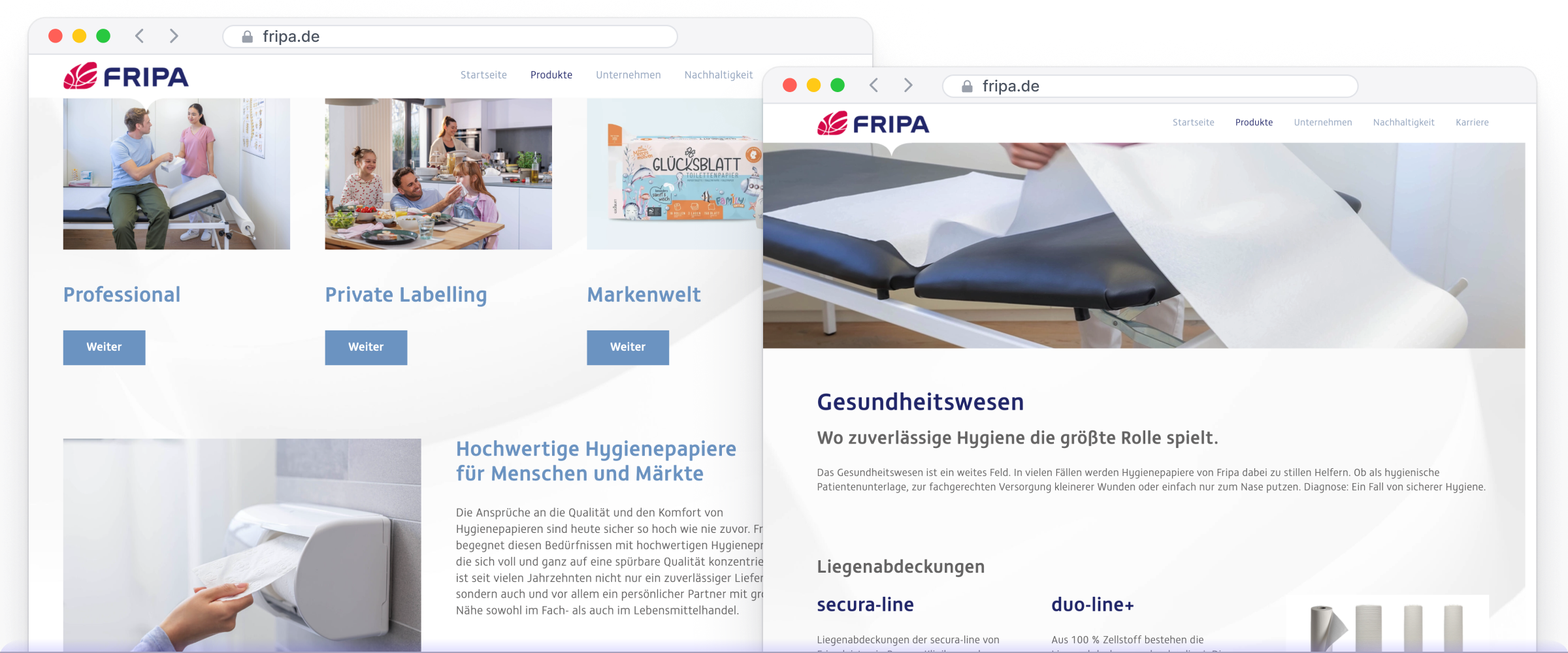
The new platform also provided an opportunity to simplify customer experience. Fripa introduced a refreshed design with more streamlined user flows, while the composable architecture clearly separates the frontend, commerce backend and content layer. This gives the company greater control over the individual components of its digital experience and makes future changes easier to implement.
Despite the complexity of the B2B requirements and a tight project budget, the new platform was delivered in around 40 person-days of implementation effort, and the MVP went live within five months.
The result is a lean, modern commerce foundation that enables Fripa to support its complex B2B requirements today while creating room to evolve its digital experience over time.

The move to commercetools has given us the flexibility to support our B2B buyers more effectively. We can now address complex pricing requirements, optimize the customer experience and move faster on new opportunities, giving us a platform that supports our business rather than limiting it.
Tobias Popp
Head of eCommerce, Fripa Papierfabrik Albert Friedrich KG