.png)

Get in touch
Stay informed
Receive monthly updates on trends, products and growth insights in your inbox.





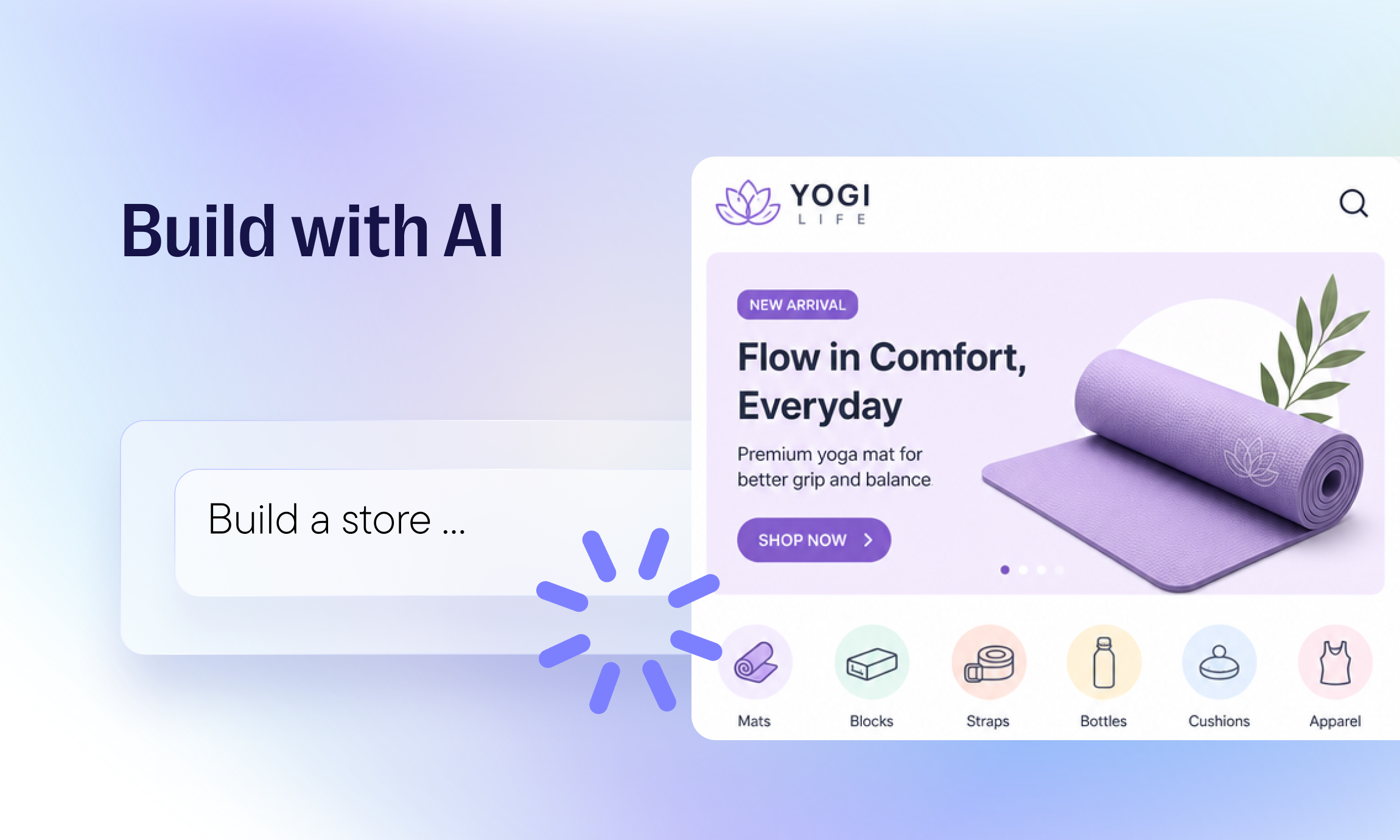

On 2 September, Anthropic open-sourced a blueprint for commerce agents: A shopper agent and a merchant agent, both able to reason about products, carts and orders out of the box. It’s a strong starting point, and deliberately unopinionated about what sits underneath: The commerce backend, the payment path, workflow logic, permissions and approvals and the audit trail. Those belong to the commerce platform, and a reference architecture that made guesses at them would be wrong for almost everyone.
So, we ran both agents against real commercetools projects. What we found out is that not only does the blueprint run on commercetools, but it runs fast: One engineer wired it up overnight, another in about two hours.
Speed, however, isn’t enough. While the blueprint gets you a working AI agent, it’s the underlying platform that gets you a dependable foundation to run agents, fast and securely. And finally, the most pressing factor: The commerce is where the remaining cost and risk sit, and where commercetools is uniquely well-positioned.
An agent is only as good as the commerce truth behind it. A demo answers questions from a static product list. A real agent answers them from a real catalog, with actual promotions, contract pricing, tax rules and live inventory. Get those wrong and the result is a mispriced order, an oversell or a promise you cannot fulfill. In other words, revenue walking out of the front door.
Reconciling all of it is the system of record's job, and where the real effort lies — and precisely what commercetools is built for. To make that connection trivial, we are shipping two lean commercetools for Builders skills: a shopper agent skill and a merchant agent skill. Each skill will build an agent based on the Anthropic example and extend it to meet your custom requirements.
With our expanding commercetools for Builders library, standard wiring no longer eats the engineering time you would rather spend on what differentiates your commerce experience.
Anthropic's agents, ours, or one you build yourself: The platform underneath should not care. What must stay in one place is commerce data, entitlements and the audit trail. Run three agents against three sources of pricing and you have three versions of the truth: A reconciliation problem before it is an AI problem.
This is where the blueprint hands over: A shopper agent that reads is comparatively low-risk. A merchant agent that writes is a different proposition.
The blueprint gives you an agent that can propose a promotion, and whether it’s allowed is determined by the approval gate. The gate checks the agent’s identity and, once the action is confirmed, proceeds with the change.
That brings us closer to autonomy, but we’re not there yet in most cases. The agent can suggest the price drop and cannot yet execute without a human in the loop. That remains the industry standard for enterprises, as the company needs to know who was responsible for the sign-off on the huge discount during the holiday season.
That balance — pushing the frontier of agentic commerce while maintaining enterprise-grade control — is where commercetools already has solid ground.
1. Install the whole AI plugin, not just the agent skill. The agent skills lean on the foundational ones — platform, checkout, storefront. Installing piecemeal gets you an agent that knows the shape of the job but not how commercetools does it.
2. Decide the use case for each agent before you build. The shopping agent serves your customers; the merchant agent runs your store. Both sides have unlimited complexity to wander into, and an agent pointed at "commerce" evaluates against nothing. Pick one job each: "Help customers find the right size even if there is no size harmonization data available" and "flags stock that won't cover a promotion" — and you have something you can actually judge.
3. Start in an isolated project with demo data — then don't trust what it tells you. A sandbox is the right place to get the thing running, but without data, you won't get much insight. Try to bring a relatively big chunk of real data to experiment.
The blueprint is real, it works on commercetools today, and the agent half of this problem is largely solved. The half that’s left — permissions, approvals, audit, evaluations — is the expensive half, and it is what a commerce platform exists to carry.
And our recommendation is simple. Take the Anthropic blueprint, add the new agent skills from the commercetools for Builders library, and put a prototype together this week. Start where the agent only reads. Move to the write path once you have settled who approves what. And whatever agents you end up running, keep commerce data and the audit trail in one system — that single decision is what keeps five agents from becoming five separate risks.
Explore the skills we already have available in our commercetools for Builders library — and stay tuned for more!


Nicolas is Product Marketing Manager - Intelligence & Ecosystem at commercetools. He brings extensive experience in consumer and market intelligence across a variety of verticals, specializing in identifying key market and competitive trends to inform strategic business decisions and drive customer-centric strategies.
Receive monthly updates on trends, products and growth insights in your inbox.