
.png)
Get in touch
Stay informed
Receive monthly updates on trends, products and growth insights in your inbox.




Every milestone your company achieves on its path to growth, be it a new brand launch, international expansion or omnichannel fulfillment, you can be sure the level of complexity in product data will increase. Sometimes, exponentially.
For example, a product catalog that works in the UK won’t be exactly the same in Germany, and targeting consumers with a specific set of products can’t be achieved the same way as with B2B buyers. Translating the different brands, markets, channels, customer segments and even multiple business models into product catalogs creates challenges such as these:
For many enterprises, this complexity is managed through a combination of legacy commerce platforms, standalone PIM systems, spreadsheets, custom integrations and manual workflows. Each solution addresses part of the problem, but together they create silos and data sources, resulting in a fragmented product data landscape that’s difficult to maintain and slow to evolve.
And while enterprises have been dealing with product data challenges for years, a new shift is making the problem more urgent: Agentic commerce.
AI-powered shopping experiences are changing how customers discover and purchase products. But AI agents require something traditional commerce architectures often struggle to provide: Structured, consistent and machine-readable product data.
Products with incomplete attributes, inconsistent naming conventions or disconnected information sources become harder for AI systems to understand and surface. The product data foundation that powered yesterday’s commerce experiences isn’t enough for tomorrow’s.
Product catalogs will become more complex, so what can business leaders do without resorting to yet another multi-year replatforming initiative?
The answer is incremental modernization. This is exactly where Product Catalog comes in.
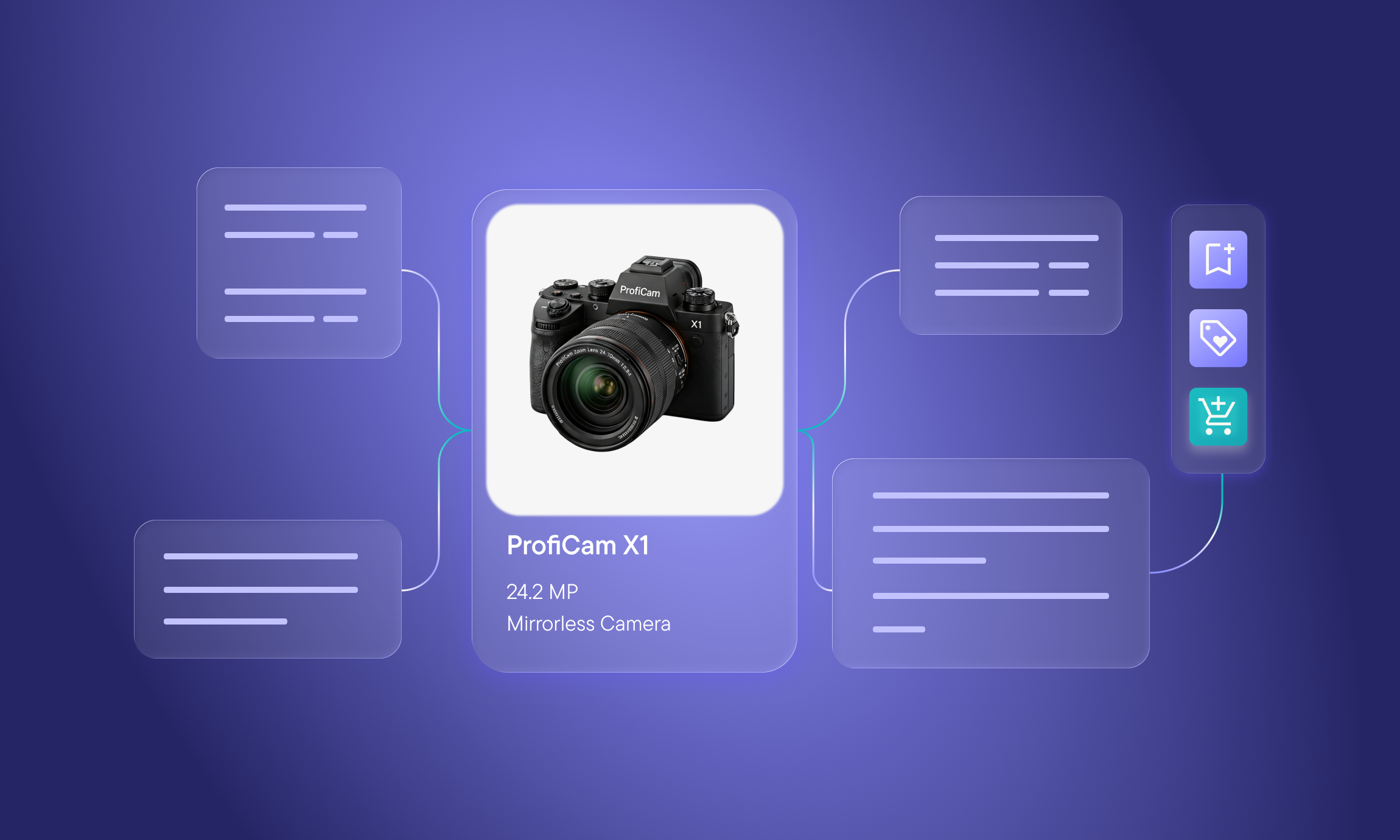
Product Catalog provides a standalone, plug-in module for managing complex product data alongside an existing commerce infrastructure. It gives organizations the capabilities they need to modernize their product foundation without replacing their current systems or waiting years for transformation programs to deliver value.
Unlike traditional product information management (PIM) solutions that sit outside commerce platforms and require additional synchronization layers, Product Catalog is commerce-native.
Product data flows directly into commerce experiences through live APIs, providing the foundation needed for storefronts, marketplaces, mobile applications and emerging AI-powered shopping channels.
Product Catalog manages the product information that commerce actually needs:
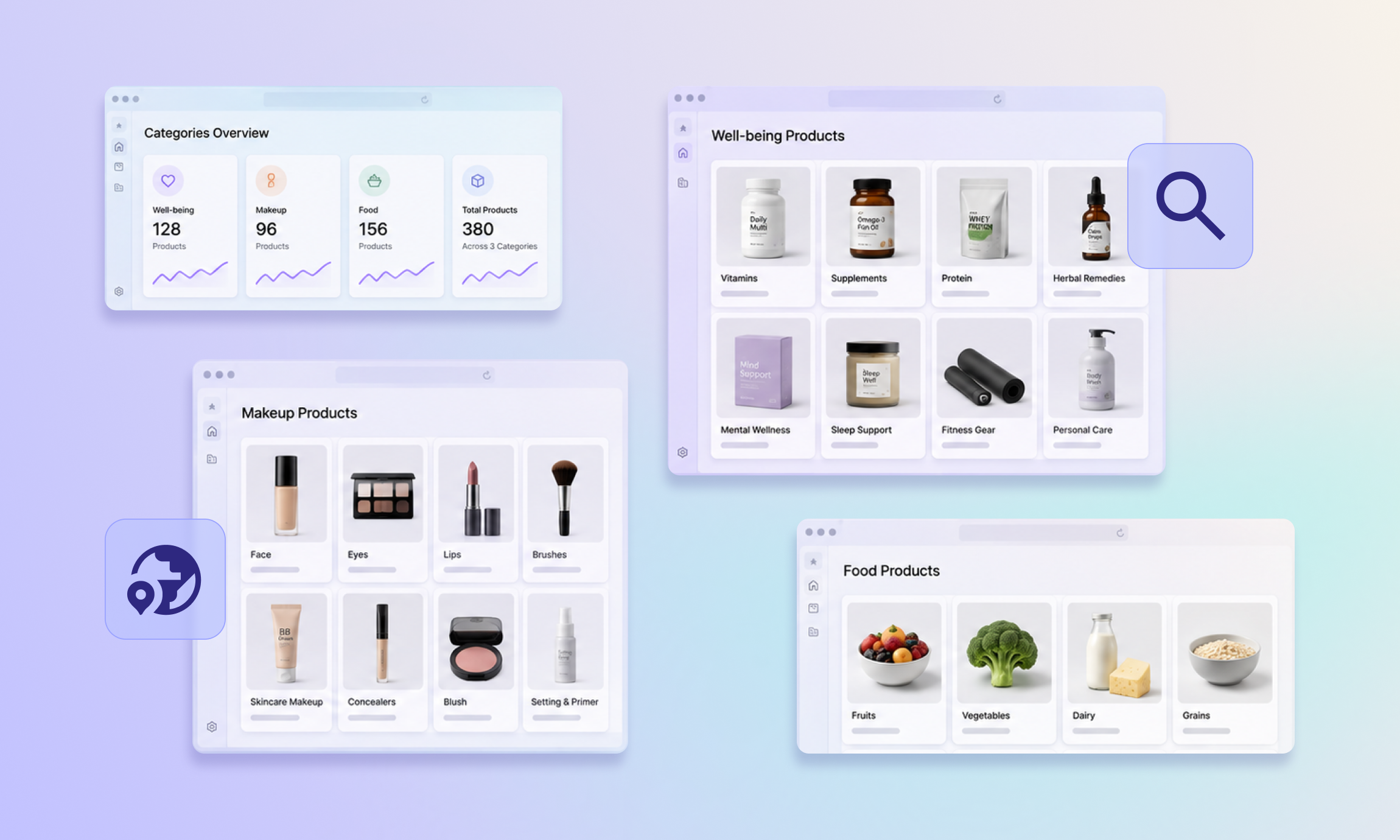
This way, the Product Catalog module helps organizations overcome complex product data challenges across industries and commerce models:
Product Catalog provides the flexibility, performance and business capabilities enterprises need to manage increasingly complex product ecosystems.
Enterprise catalogs rarely fit into simple product structures: A global retailer may sell thousands of products across multiple brands, regions and channels. A manufacturer may manage complex product variations, bundles and configurations. A digital business may need to combine physical products with services or subscriptions.
Product Catalog provides a flexible enterprise data model that supports virtually any product structure, so your business can:
Instead of adapting business models to rigid catalog structures, enterprises can create product models that reflect how they actually operate.
Product Catalog includes powerful search and pricing capabilities, such as multiple currencies and customer group pricing, directly within the commerce platform, reducing the need for separate tools and additional integrations.
Different regions and channels often require different assortments, pricing models, availability rules and product experiences. Product Catalog enables enterprises to manage global product complexity from one central foundation while adapting experiences for local markets. Businesses can manage:
Instead of creating separate catalogs for every market, enterprises can maintain consistency while delivering localized experiences.
Product Catalog provides business teams with the tools they need to manage products efficiently through the Merchant Center experience to:
This enables merchandisers, product teams and operations teams to make changes faster while reducing dependency on technical resources.
Creating a scalable product catalog requires more than storing product information. Enterprises need structured product models that define how products are represented, searched and understood.
Historically, creating these models required significant manual effort. Teams needed to define product types, attributes and relationships before products could be added to the catalog.
Smart Data Modeler accelerates this process by using AI to help teams create product models faster and with greater consistency, so businesses can:
As agentic shopping accelerates, it becomes increasingly important to meet each and every single set of requirements and recommended product attributes from AI channels, such as ChatGPT, Gemini and Copilot.
The Smart Product Modeler helps you structure product data for AI agents by analyzing a sample of your existing catalog and mapping it to the attribute structure required by your target AI channel. Then it generates a channel-ready Product Type for your project.
If your catalog is missing mandatory fields, agentic mapping flags them, enabling you to resolve these gaps before going live.
The Product Catalog module gives enterprises a faster, lower-risk path to modern commerce with a commerce-native product data foundation that works alongside existing systems.
By combining flexible modeling, built-in search and pricing, business-user workflows and AI-assisted product creation, Product Catalog helps teams reduce complexity, accelerate time-to-value and prepare for emerging commerce experiences.
Start with the capabilities you need today and expand as your business evolves, creating a modular product foundation that supports every channel, from storefronts to AI-powered shopping experiences.
Contact our team for more information — or start building your Product Catalog for free.

Nicolas is Product Marketing Manager & Competitive Intelligence Lead at commercetools. He brings extensive experience in consumer and market intelligence across a variety of verticals, specializing in identifying key market and competitive trends to inform strategic business decisions and drive customer-centric strategies.

Manuela leads content strategy at commercetools. With over 20 years of experience in B2B SaaS, she writes about all things commerce by day and turns to fiction by night. She loves long walks, traveling, and, unsurprisingly, reading books.
Receive monthly updates on trends, products and growth insights in your inbox.