
Get in touch
Stay informed
Receive monthly updates on trends, products and growth insights in your inbox.




We all know that brick-and-mortar stores will remain an integral part of shopping for years to come. Even Gen Z shoppers, the most digitally savvy generation in history, enjoy shopping in-store, with almost 50% of their spending coming from in-store mass merchandise and grocery purchases.
While stores will remain alive and kicking, their core role is not only changing but often transcending the transaction-centric model we’ve experienced so far. This is because consumers are also changing and increasingly expect more than a place to shop.
Of course, there will always be a sizeable amount of shoppers who prefer to research, compare and buy online, and just want to visit the store to ascertain that the product meets their expectations. Many others will show up to fulfill a task, like refunds, returns or exchanges.
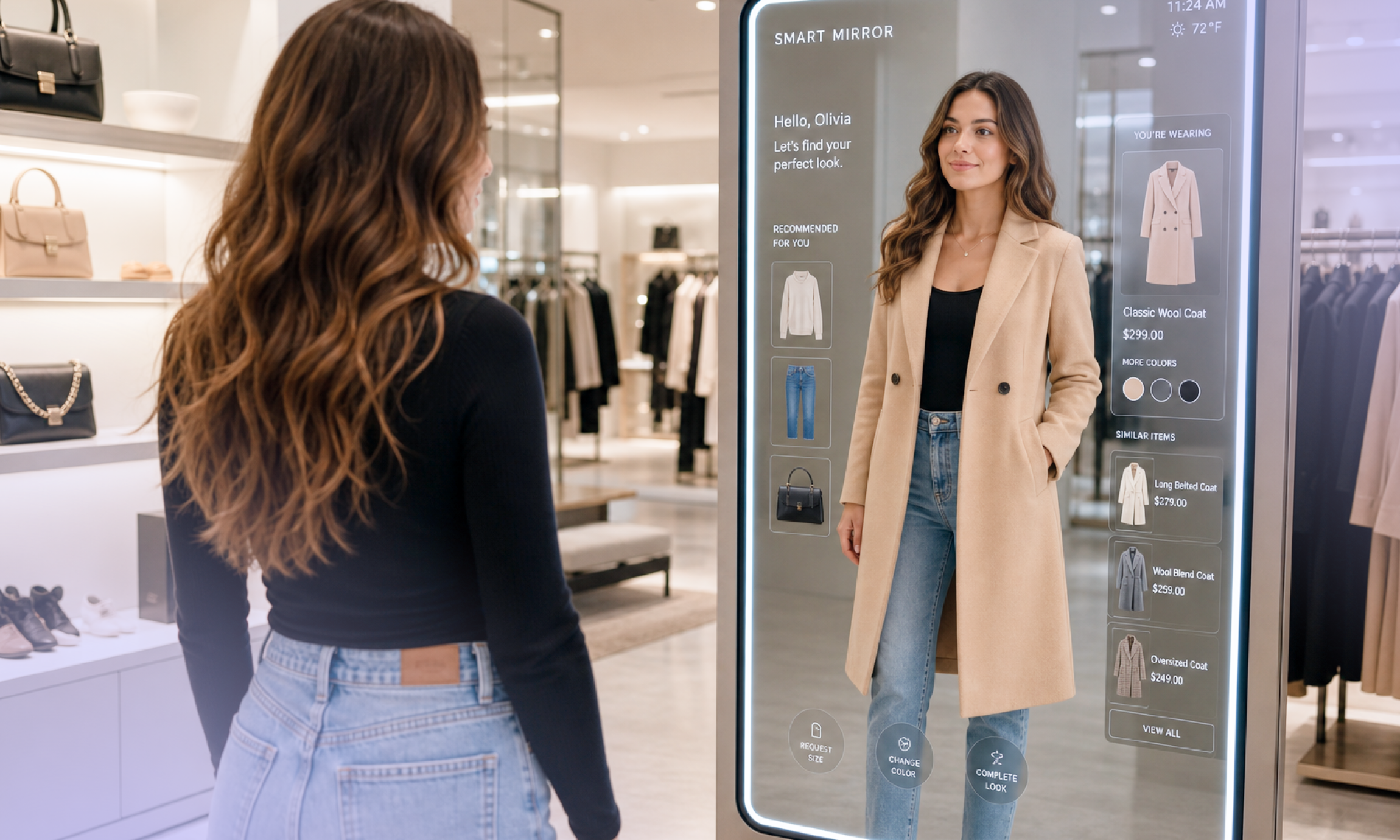
There will be cases when shoppers might like to treat themselves to a spot of retail therapy, so they may visit stores to get inspired, try on products and get recommendations. And finally, many people may just want to get entertainment, take pictures for their socials and experience brand storytelling at its finest.
This means that the purely transactional role of stores is giving space to softer “missions” that enhance the customer experience while strengthening their brand power.
According to this interesting article by McKinsey, the future success of stores is directly linked to a specific purpose: Some stores will exist primarily for convenience, enabling customers to quickly find, purchase and fulfill their needs. Others will focus on discovery, helping customers explore products, receive expert guidance and engage more deeply with a brand. And a few others will take discovery up a notch with experiential retail.
These missions can be broadly grouped into three categories:
As you can see, each mission addresses different customer needs or situations and can vary depending on the types of products they’re looking for (e.g., commodity or non-commodity). Importantly, each “mission” is associated with different kinds of technology requirements.
If you’re leaving home knowing exactly what you want to purchase — groceries, medication or even a new pair of shoes — you expect that the product is stocked, so you can walk out the door with the product you intended to buy. For this mission, having inventory information beforehand will determine if you’ll run by the store across the street or the one located out of town.
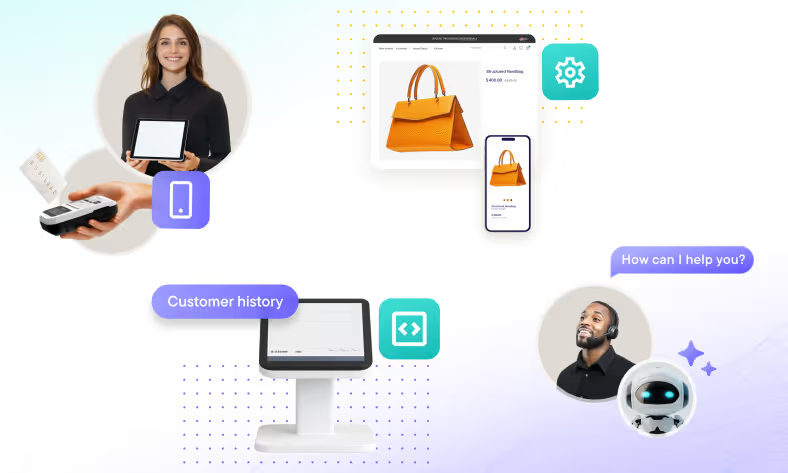
Shoppers looking to discover new products aren’t looking for something specific. That’s your typical impulse buy. Of course, there will be the ones who know they need to buy something — a present for a loved one or a new dress for a special occasion — but they’re not married to a product in particular. They’re going to the store to get inspired. This may translate into clienteling and personalized recommendations, or a guided selling journey with a store associate. The technology should enable these interactions with rich product information and customer history.
And finally, experience-focused visits are meant for customers who want to live the brand story in some shape or form. It’s meant to wow consumers and serves as a springboard for engagement. Not every visit is supposed to translate into a transaction, but if it does, the options should be there, like endless aisle, for example.
Retailers that manage stores, each with a different mission, need a commerce approach that follows two principles:
At first glance, these two principles might seem contradictory. How can retailers maintain a single source of truth while allowing each store to operate differently?
For years, retailers have been forced to choose between standardization and customization. Standardize everything, and every store looks and behaves the same. Customize everything, and suddenly every new store format, market or brand becomes another silo to maintain. Neither approach works.
Instead, retailers need a commerce platform that centralizes core business data while allowing each store to assemble the experiences it needs. Think of it like building with Lego bricks. The bricks — products, inventory, pricing, promotions, customer data and orders — remain the same across the business. But each store can combine those building blocks differently, depending on its mission, and without having to duplicate data for each store.
That means one flagship store can surface premium product assortments, exclusive promotions and clienteling experiences, while another location focuses on speed, fulfillment and convenience, all without duplicating commerce systems.
The same principle applies across brands, regions, customer segments and even business models. You’re not copying commerce data; you’re simply deciding which pieces of it are relevant for each context.
The result is a platform that’s both centrally governed and locally adaptable — a combination that becomes increasingly important as retailers experiment with new store concepts and customer journeys.
This shift also changes how we should think about the point of sale. Traditionally, the POS has been the heart of in-store technology, as it managed transactions, stored customer information locally and often became yet another system that needed to stay in sync with eCommerce.
That model, however, doesn’t fit a mission-driven store. If every store is designed to deliver a different experience, the POS can no longer be responsible for owning commerce data. Instead, it should become an interface to a shared commerce platform.
When an associate serves a customer, they shouldn’t have to wonder whether inventory is available somewhere else, whether a promotion applies or whether the customer placed an online order yesterday. Those answers should already exist in the commerce platform, ready to be surfaced when they’re needed.
In other words, the modern POS becomes an execution layer rather than the system of record. Its role is to connect associates and customers to the right commerce capabilities at exactly the right moment, whether that’s checking inventory, processing a return, creating an endless aisle order, accessing customer history or completing a transaction from anywhere in the store.
As AI becomes part of the shopping journey, the unified commerce architecture becomes even more important. Whether recommendations come from a store associate, a mobile app or an AI shopping agent, they're all relying on the same underlying commerce intelligence.
The future of physical retail will not be defined by a single store format. Instead, successful retailers will operate a variety of store experiences, each designed around a specific customer mission, whether that’s convenience, discovery or brand engagement.
The challenge is enabling these different experiences without creating disconnected systems behind the scenes. Retailers need a commerce foundation that provides a single source of truth while giving each store the flexibility to adapt and innovate.
As AI and agentic commerce introduce new ways for consumers to discover, evaluate and purchase products, this foundation becomes even more critical. Whether a customer interacts with a store associate, a digital channel or an AI shopping agent, every experience depends on access to accurate, real-time commerce intelligence.
The future of stores is not about choosing between consistency and flexibility. It is about achieving both: Retailers that can combine centralized commerce intelligence with locally optimized store experiences will be better positioned to innovate faster, adapt to changing customer expectations and compete in an increasingly AI-driven retail landscape.

White Paper
The Unified Commerce Playbook for Retail Leaders
Discover how brands and retailers can unlock the benefits of unified commerce.

Ankita is a product marketing professional at commercetools and is passionate about developing value-based product messaging to communicate the vision and value of their products to the market. She has lived and worked in five different countries and navigated roles in the consulting and financial services industry before transiting into eCommerce post MBA.
Receive monthly updates on trends, products and growth insights in your inbox.