Get in touch
Stay informed
Receive monthly updates on trends, products and growth insights in your inbox.




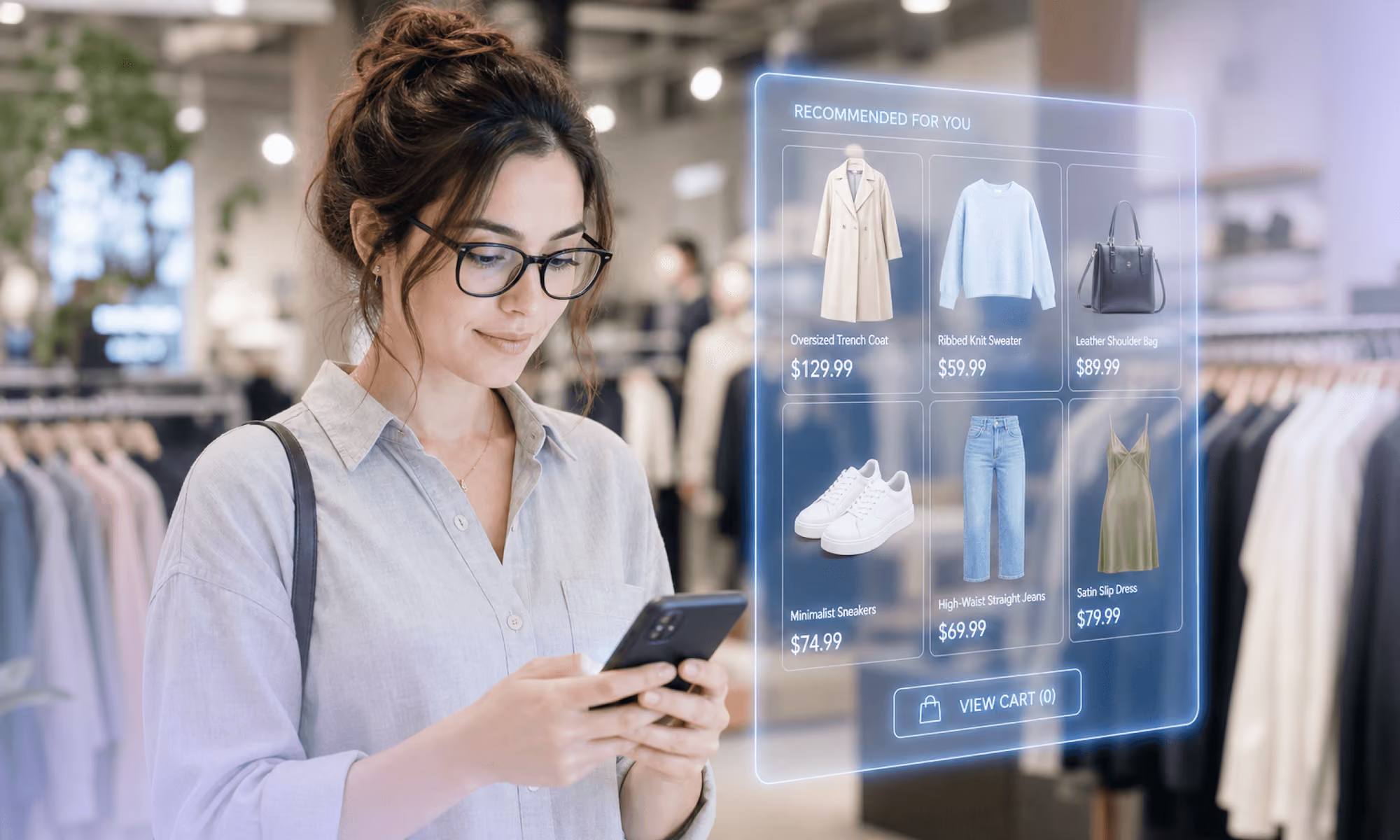
A product catches Kelly’s eye during their favorite morning show. They scan the QR code, check the product on her phone, ask an AI assistant like ChatGPT or Gemini where the best deal is nearby and choose a store for pickup. They also add a second item that isn’t in stock but will arrive at that store in two days.
By the time Kelly walks through the store doors, the shopping journey has already moved across TV, phone, AI and digital commerce. All of it was the store’s problem.
That’s how shopping works now. Customers move between channels and expect each one to know what happened in the last. The store is no exception. In fact, it’s where those expectations become tangible: Real inventory, real associates, real lines and, eventually, a real transaction.
Retailers have spent years building connected digital experiences. But the store has often remained on a different foundation, and the system at its center is the POS.
Traditional POS was built to do one thing well: Process transactions in a store. That still matters. But today, the transaction is only one part of a much bigger commerce journey. When the store runs on a separate, often older system from the rest of the business, the disconnect quickly shows up:
Instead, a price should be a price wherever the customer sees it. A promotion should work consistently across channels. And a customer should be recognizable whether they’re shopping online or standing at a store counter.
That’s why replacing one standalone POS system with another isn’t sustainable. Two years from now, the store is disconnected again, just from a different codebase.
What leading retailers are doing is to rethink the underlying foundation, where data and logic live in one place rather than being duplicated across systems. As a result, the store ceases to be a separate project and becomes an extension of the same commerce platform that runs everywhere else.
This is the thinking behind commercetools InStore: A modern enterprise POS built on the same unified commerce platform as everything else you run. Now, we’re taking it even further.
A unified foundation is only part of what a modern POS needs to deliver. The store still has to work when connectivity doesn’t. It has to meet the fiscal and tax requirements of different markets. And it has to give associates an intuitive application that supports how they actually work today — increasingly beyond the traditional checkout counter.
That’s what this latest InStore launch is designed to address. It brings together the commerce foundation and the store capabilities retailers need to operate confidently across markets and customer journeys.
Here’s a closer look at three of the challenges we’re solving:
A store can't put up a sign that says “sorry, the network is down.” The register has to keep ringing up sales, whether or not connectivity holds.
commercetools InStore can continue processing store transactions when connectivity is disrupted, then synchronize once the connection is restored, helping stores keep trading through outages.
Every market has its own rules for how transactions are recorded, reported and documented for tax and fiscal compliance. Those rules vary widely from one place to another. For a global retailer, that’s an ongoing compliance surface that a modern enterprise POS has to absorb rather than push back onto every local team.
commercetools InStore supports fiscalization requirements in supported markets, helping retailers meet local transaction, tax and receipt requirements without having to solve them separately at the store level.
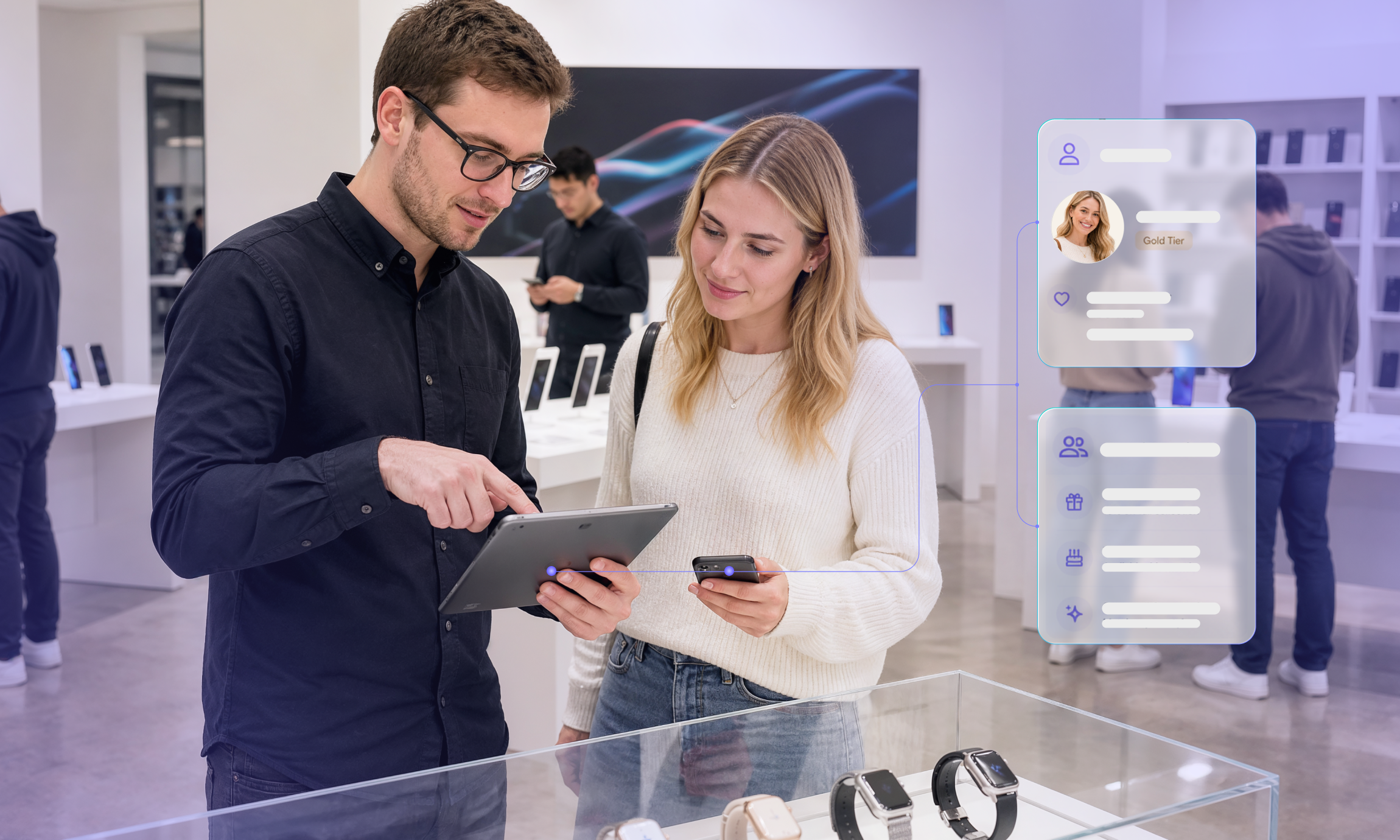
Many POS software vendors still assume an associate is standing still behind a counter. But the reality is that they’re not. Store associates are on the floor, helping a customer check stock at another location, processing a return for an online purchase, or looking up a loyalty profile mid-conversation. The application in an associate’s hands needs to support that reality.
The productized InStore POS application gives associates a modern, browser-based experience that works across desktop, tablet and handheld devices, giving retailers more flexibility in how and where checkout and other store workflows happen.
We’ll explore each of those capabilities in more detail soon. Stay tuned!
Modernizing the store was never really about finding a better POS. It’s about extending the same unified commerce platform already running your business into the one place it hasn’t fully reached yet.
Retail didn't get more complicated because retailers made bad decisions. It got more complicated because customers like Kelly started moving faster than most store systems were ever designed to follow. The retailers who close that gap won't do it by bolting on another standalone system. They’ll do it by giving the store the same foundation as everything else.
That’s the direction commercetools InStore brings to modern retail. Over the next few posts, we'll go deeper into how, starting with what it actually takes to keep a store running when the connection drops.

Whitepaper
The Retailer’s Guide to Choosing a Modern POS Platform
A practical guide to evaluate POS technologies and modernize your store operations.

With a quarter century of experience in retail product management and “a black belt in shopping,” Martha has built and evangelised solutions including point-of-sale, head office, returns management, promotional pricing, and end-to-end operations. At commercetools, she is enabling the future of unified commerce in physical stores today with InStore, focusing on empowering store colleagues to delight shoppers.
Receive monthly updates on trends, products and growth insights in your inbox.